Fashion for Cancer x Shentonista — The Freedom To Be
Featuring
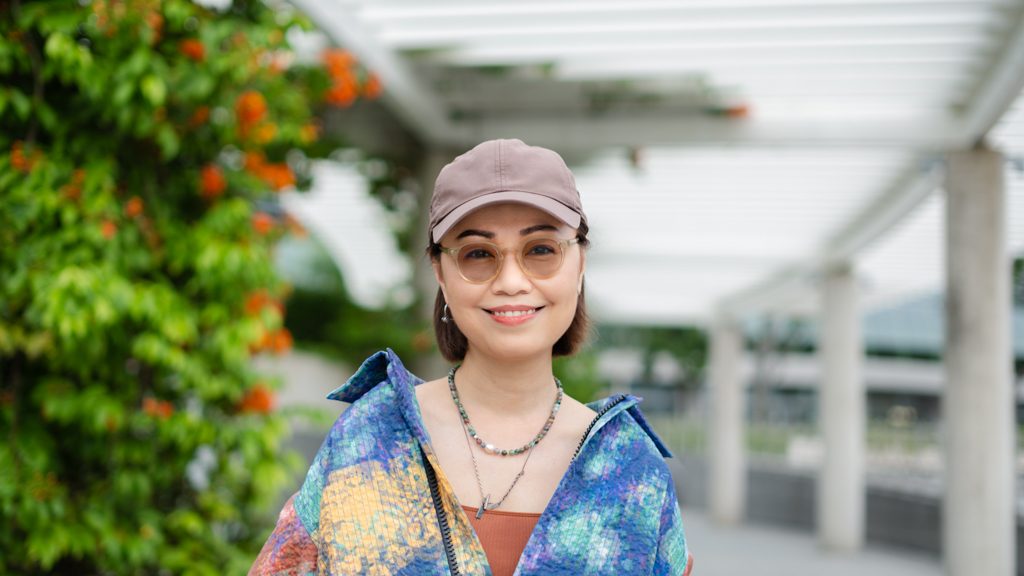
Joanna
Artiste
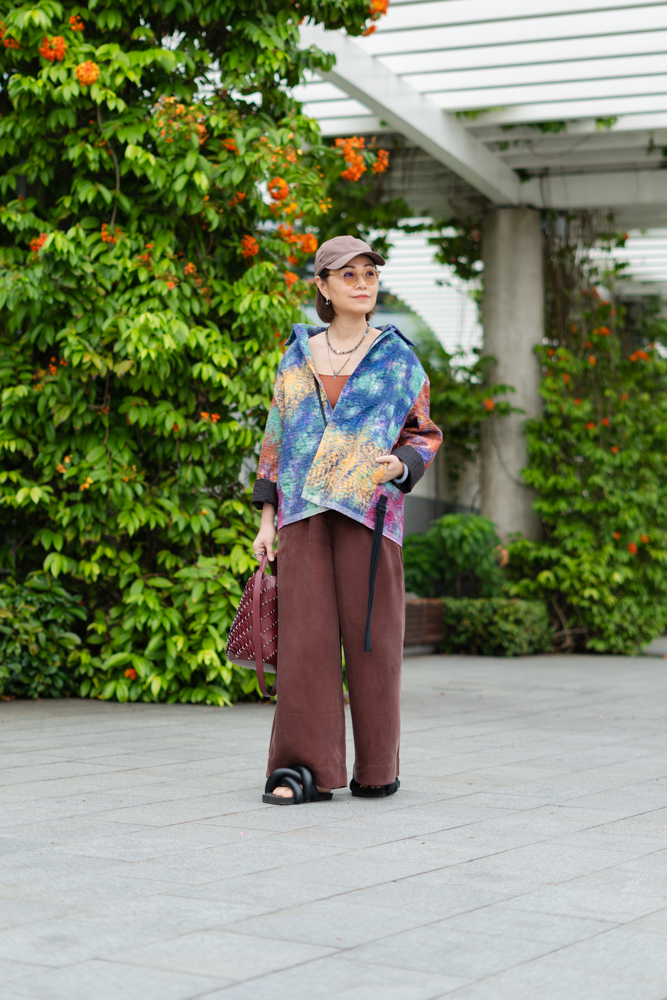
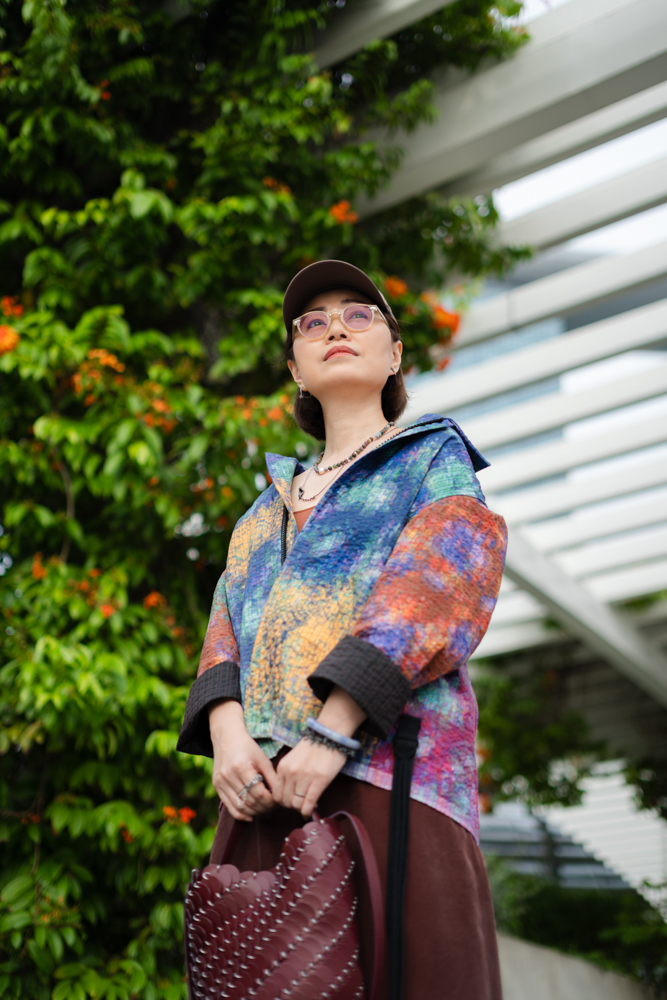
Wearing
| Jacket |
Craig Green |
| Bottoms |
Rye |
| Shoes |
YUME YUME |
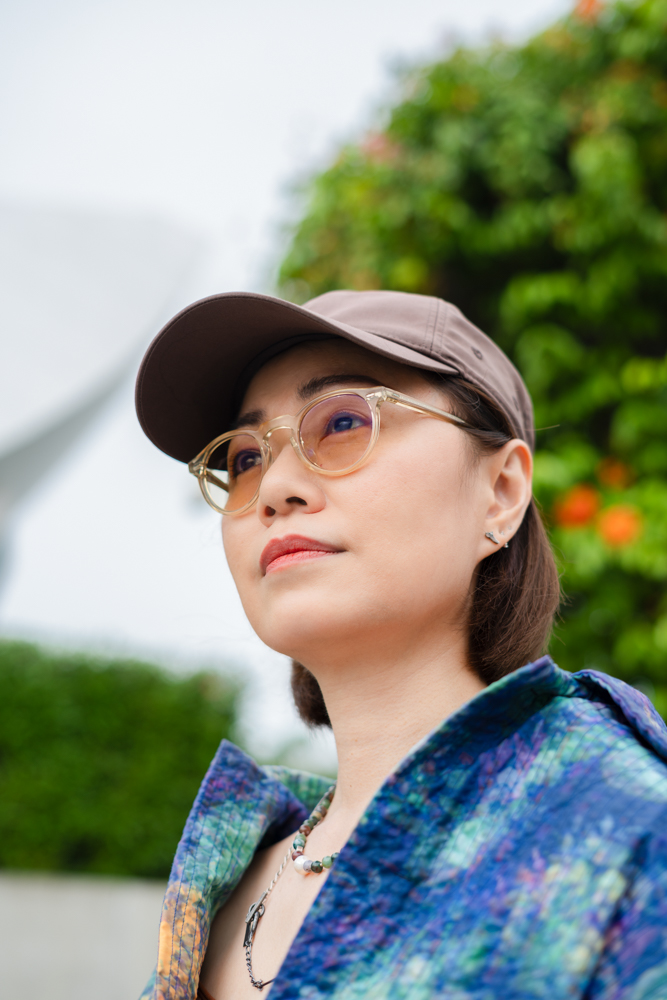
| Cap |
COS |
| Glasses |
Oliver Peoples |
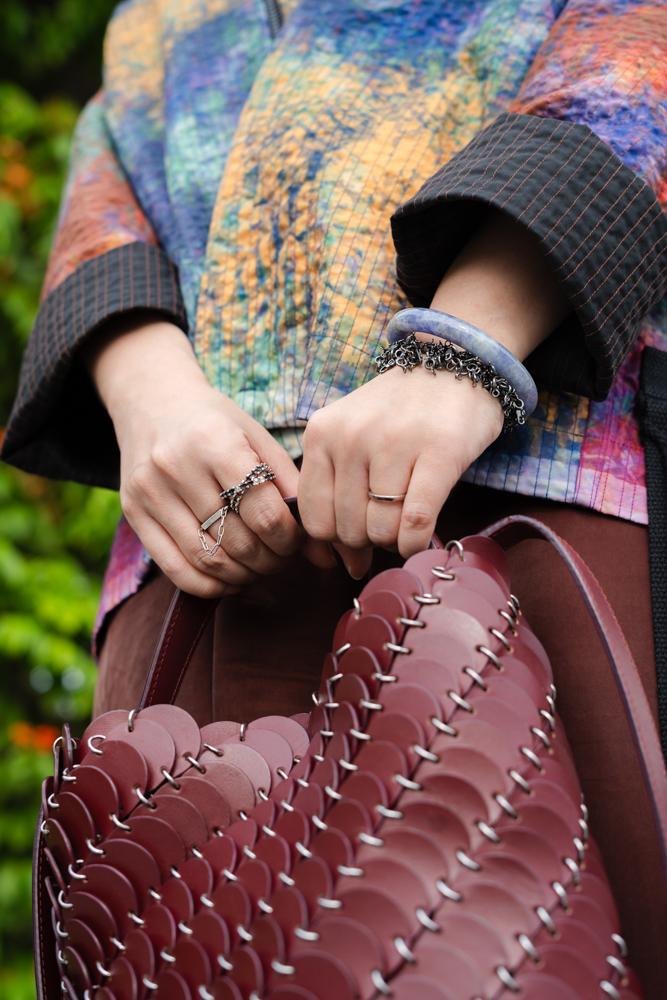
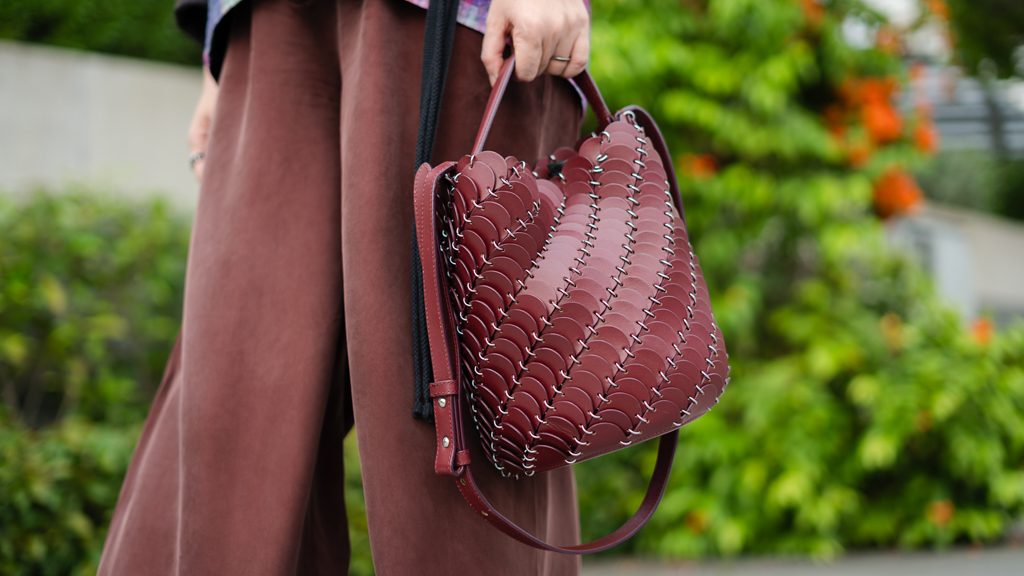
| Bag |
Rabanne |
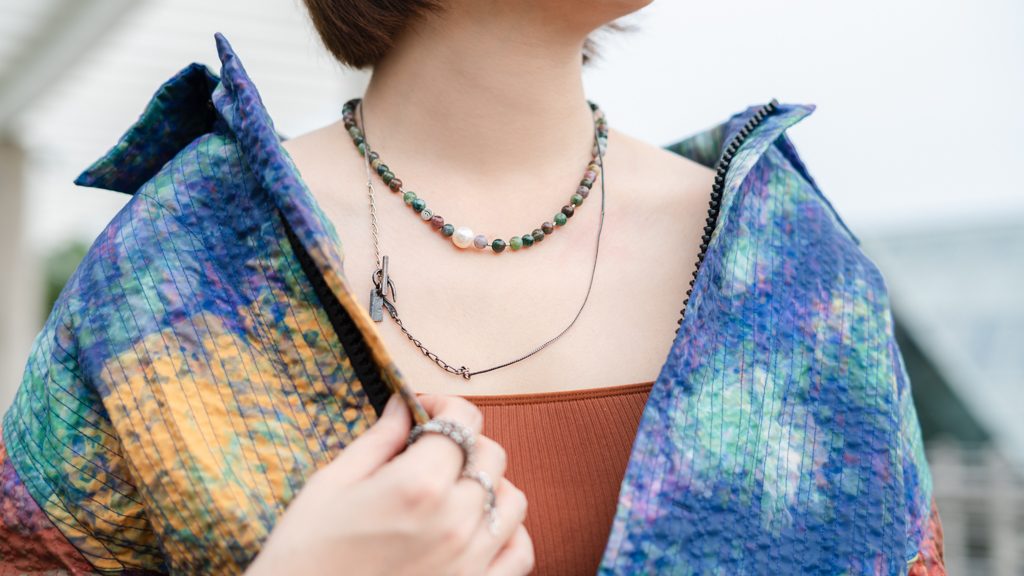
| Accessories |
Argentum |
When you were first diagnosed with breast cancer, what was the first thought that ran through your mind?
I think cancer comes with a lot of baggage. There was a lot of fear, and a lot of anxiety. That fear was irrational, because my doctor was very reassuring. She told me, “Hey, even if it is cancer, it’s in the very early stages and breast cancer is very treatable.” So, she gave me all the facts and there was really no reason at all for me to believe I wouldn’t make it through.
But I think nevertheless, the word cancer carries so much terror. I was just very worried, primarily also with how it would affect my career and performance opportunities. It was a whole rollercoaster of emotions.
What were some unexpected emotional shifts that you met along the way?
After the initial anxiety, doing my own research, and hearing from my doctor, I kind of settled down and I was quite optimistic. I think I just flipped the switch into warrior mode to fight this. It definitely awakened a part of me that I didn’t know I had. If you asked me about how I thought about myself before, my own perception is that I am kind of weak…like I don’t think of myself as particularly very fit, or having a very strong will or character. But now that I’ve beaten cancer and survived the treatment, there’s a part of me that wears the survivor emblem with a lot of pride.
But I also had a little bit of guilt because I knew I got away “easy,” because it was Stage 1 breast cancer — it was very treatable, and I didn’t have to do chemotherapy. I have a bit of survivor’s guilt because I know people who have really, really struggled with their cancer journey — even in this particular case with Fashion For Cancer (FFC), where we have model ambassadors who are actually going through treatment while they’re preparing to walk the runway. So it’s really quite inspiring, but also very humbling.
You mentioned this warrior mindset. What gave you strength during those difficult moments?
A lot of support from my loved ones — my husband, my immediate family, my friends. Everybody was just so respectful. Because I’m in the entertainment industry, I guess I just know a lot of people, but I also appreciated that lots of people who were acquaintances just dropped me a note to say, “Hey, I heard about it on the news, but there’s no need to reply, just focus on getting better.” I just appreciated that they were so aware that sometimes just replying to well-wishes can become a burden for people who are trying to recover and focus on their health. I’m just very grateful for that kind of awareness.
When you were standing on the National Day Parade stage facing the crowds only a week after finishing treatment, what did you hope to convey to people?
I had mixed feelings. On the one hand, I wanted to show that it’s not as scary as it sounds. You can be diagnosed with cancer and you can still try and fulfil your dreams — it’s not a zero-sum thing.
But on the other hand, I didn’t want people who are facing cancer to feel obliged to also be a warrior or to have to put on a brave front. Every individual’s cancer journey is very different, and if people need to just take time to be by themselves and quit work, that’s also very valid. So I was also worried that I was sending out the wrong message — that everyone has to fight, be strong, or shine on stage to be a valid cancer survivor. But while I was onstage, I was just grateful to be there; how fortunate I am that life could resume almost as per normal.
How did this turning point shift your personal mindset, as well as your connection to your music and art?
Definitely this sense that I’m not as invincible as I thought. I never thought of myself as super fit, but I just always assumed that I was quite sturdy — I used to party, I drank a lot. I kind of just assumed that it wouldn’t happen to me, so it was really sobering, literally, when you realise that the body and your health are quite vulnerable, and that you have to take care of them. I’ve been exercising more moderation in my life across the board. But because I am who I am, it’s also important to me that I enjoy my life, so it’s about finding that balance between enjoyment, socialising, and taking care of my health.
In terms of how I approach my craft, I don’t think much has changed, but I think the sense that time is very limited definitely kind of pushed me to try and forge forward for the things that I really wanted to do, like my bucket list items. For example, I just finished a hybrid art project called big big small small that I’ve been putting off for two decades, since I was in junior college doing theatre studies. That was the kind of art that I thought I would be making, but I didn’t think I had the resolve and risk-taking appetite to see it through until the cancer happened. So it definitely was a turning point for me.
Now that you’ve been collaborating with FFC, what has it been like interacting with the community?
I don’t think I’ve done much to uplift the community. I think the community has been uplifting me! There’s a lot of warmth and understanding. Fundamentally, there’s a lot of unspoken understanding within the group and we don’t have to over-explain things. If you’ve been through it, you get it, you know. In some ways, there’s an immediate reason for us to all bond, but I think it was also just wonderful to combine my interests in style and fashion with the advocacy. I still have to catch up — they’ve been doing a lot — but now I’m trying to do more to spread the word and raise awareness.
Lastly, what’s your message to someone who is struggling with cancer or facing an obstacle that feels insurmountable today?
When discussing cancer, we often hear another C-word associated with it—courage.
Courage looks different for every person. Resolving to complete a tough treatment protocol takes courage. Asking for and accepting help takes courage. Smiling takes courage. Expressing your anger and frustration takes courage. Holding it in takes courage, but so does letting it out.
Meeting the FFC model ambassadors has introduced me to a diverse group of beautiful people with one thing in common—they all wear courage with style.
This is a feature for Fashion for Cancer 2026, spotlighting 7 cancer survivors and warriors. Founded by Ong Bee Yan, Fashion for Cancer is a charity fashion show aimed at raising funds for cancer research and financial aid. Tickets to the FFC2026 Fashion Show may be sold out, but you can still support the cancer community by donating to the NCCS Cancer Fund here.
Like this? Share it.
What others are saying
There are no comments yet.
Leave a Reply