Another Nightlife Story: 5210pm
What does the perfect night out look like to you? Is it cosying up with your closest friends at a quiet wine bar, trading gossip over cheese and crackers? Or dancing the night away to heart-thumping music on a dance floor filled with sweaty, inebriated bodies? We might all have a different answer to this question, but ask anyone what they’d define as nightlife, and more often than not, they’d respond with the latter.
They’re not wrong—in Singapore, nightlife has often been framed around excess and escapism. While these spaces continue to exist, a quieter shift is taking place. It might not be too obvious on the surface, but in the undercurrents of the local nightlife scene, parts are moving towards a more intentional, experience-driven approach to going out as a whole, with a greater value being placed on atmosphere, connection, and shared moments, even as clubs centred on spectacle and status remain firmly embedded in the city’s after-hours landscape. Naturally, this coexistence raises broader questions: what role does nightlife play today in how people gather, connect, and unwind? And how have societal pressures like rising rental costs and shifting attitudes towards partying reshaped our local nightlife ecosystem? In this new Shentonista series, Another Nightlife Story, we speak to organisers and collectives who are tackling these big questions and defining nightlife in their own ways. From reimagining time and space to building communities that extend beyond the dance floor, these are the people shaping the nightlife of today through care, innovation, and persistence.
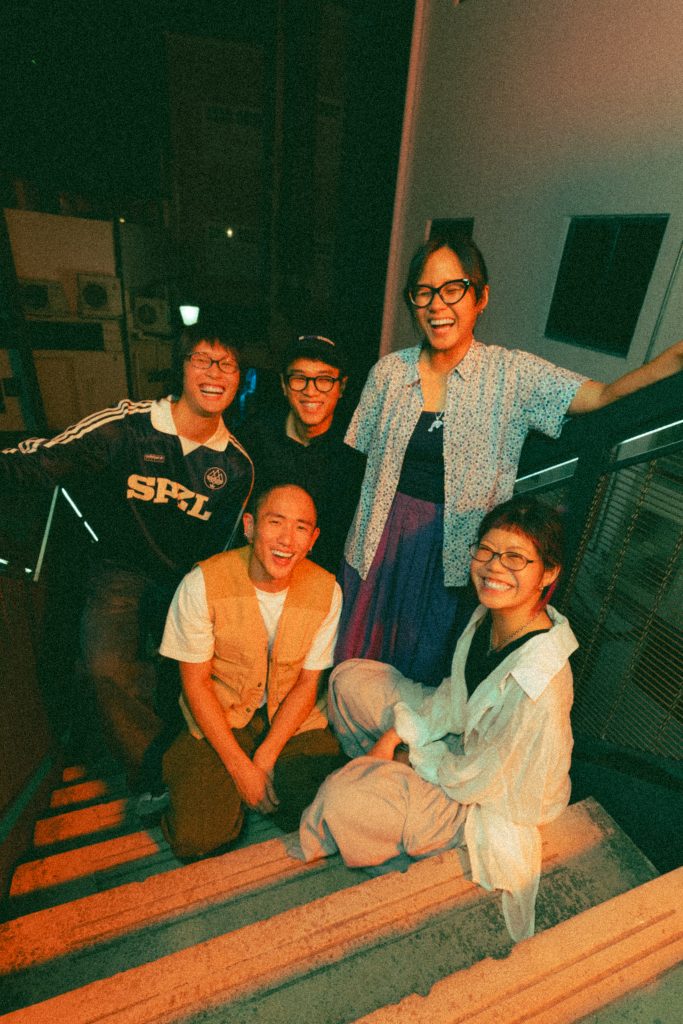
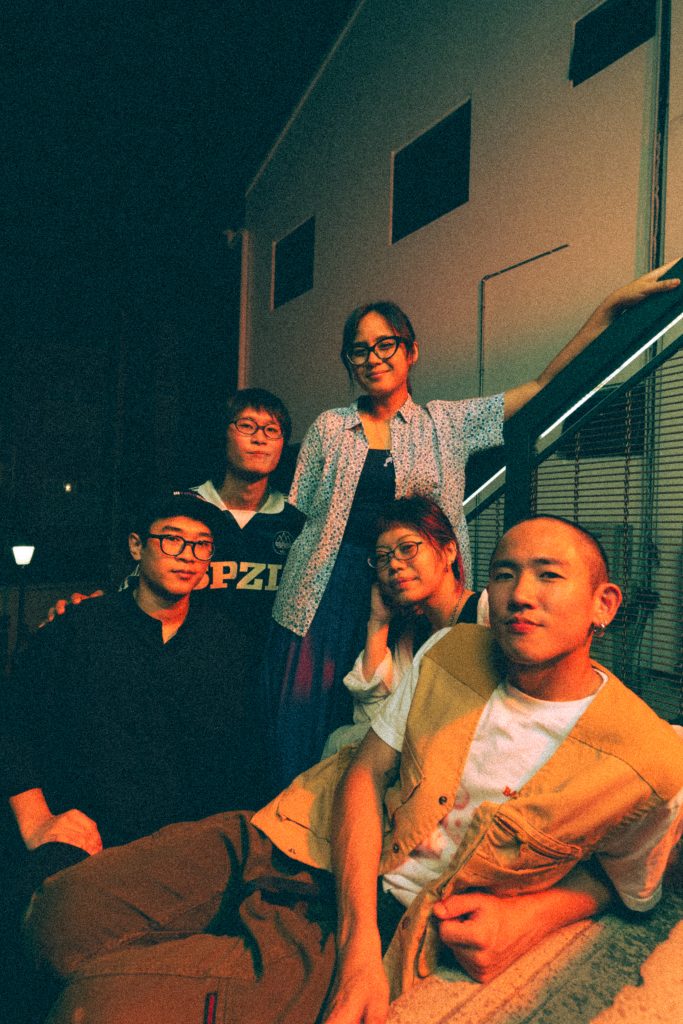
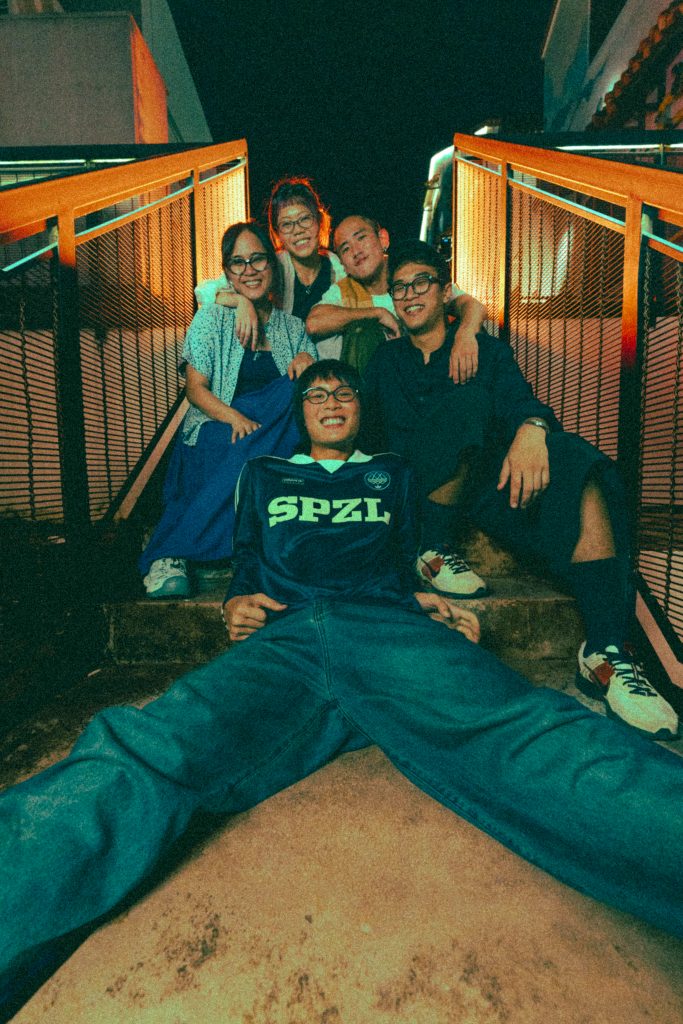
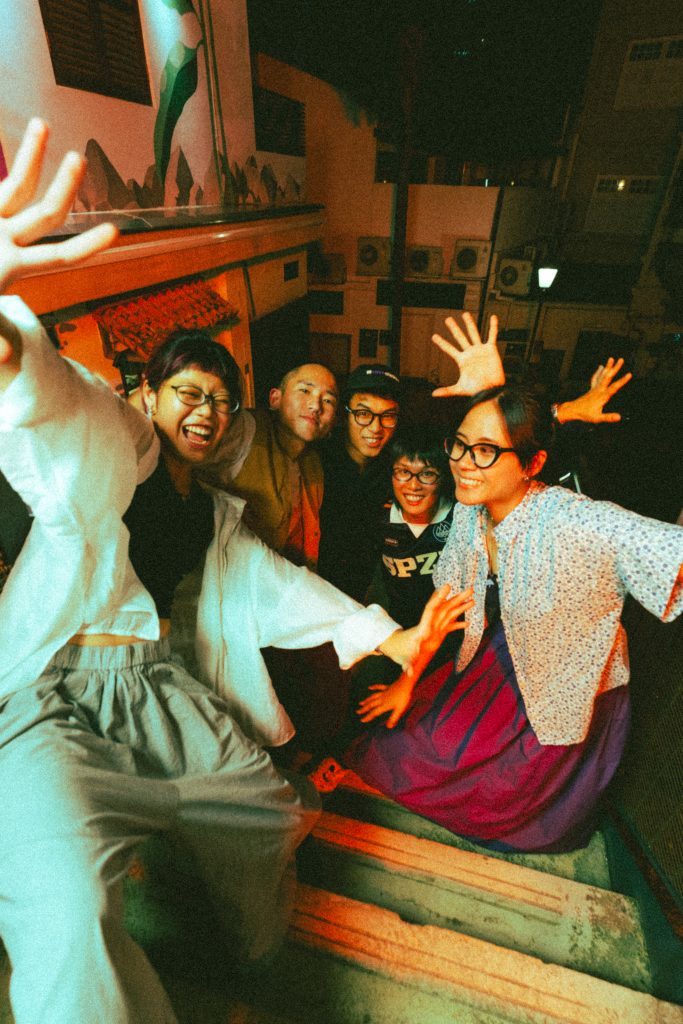
In the first part of this series, we’re spotlighting 5210pm, a rising collective of five friends—Javan, Loy, Atiq, Gayle, and Belle—who came together in the aftermath of the Covid-19 circuit breaker. Four of the five are DJs, but all are united by their shared love for nightlife. Channeling the spirit of the scene through music, craftsmanship, and community, the collective creates experiences that respond to the practical realities of partying today—from affordability and accessibility to a desire for connection. Their interpretation took the form of Sunday Mess, a daytime party held from 5 to 10pm that gave the collective its name and has since become their signature of sorts.
The logic behind Sunday Mess is simple and considered. By ending at 10pm, guests have time to take public transport home, avoiding costly late-night cab rides. Early-bird discounts offered through a Telegram group help lower the barrier to entry, while the afternoon start time encourages people to linger, mingle, and engage with one another without the haze of night or alcohol. The lack of age restrictions also allows them to open their doors to a wider community, one that you wouldn’t find at your typical club event or rave. Together, these choices reflect a more holistic approach to partying, one that considers not just the dance floor itself, but the people, and their journey.
Having recently celebrated their second anniversary, we sat down with the collective as they reflected on their evolving relationship with community and nightlife.
For our readers who may or may not have heard of 5210pm before, could you briefly introduce yourself? What it is that you do and champion here?
Javan: It’s quite simple. We want to throw a good party and give everyone a good time, while keeping it affordable and accessible for everyone.
Loy: Our mission is to explore what else a party can be apart from music and DJs, but at the same time, not straying from the core essence of a rave. So we’re exploring our options yet keeping ourselves grounded, and making sure we still offer the experience of what a party used to be.
Belle: For the younger generation, it can be quite difficult to find an appropriate space to learn about or experience partying, especially after Covid. How they’re exposed to partying is probably through social media, so like what Loy said, we hope to ground them and provide a different experience of what a party can be, besides it being at night.
Parties are traditionally about staying out late and chasing more, but you’ve made afternoons your stage. How do daytime parties feel different from nights out?
Loy: First of all, the sun is up (laughs), but it’s quite personal for me. When I party at night, I’m looking for a very specific experience. I want it to be dark—I almost don’t want any light in the room. I want the music to be super loud. It’s more isolating, but not in bad a way, because sometimes that’s what I want. But when it’s in the day, there are a lot more possibilities. I would say that isolation is almost impossible at a day party because the sun is up and I think maybe that’s why we love it.
Javan: They’re both very different in nature. When you go to a daytime party, you’re more aware of your surroundings and it gives you the opportunity to make friends and talk to people.
“It’s also quite important to have a daytime experience because there’s definitely a different set of expectations if you were to throw a night versus day party. For us, we want to cultivate a sense of community and create a safe space, which is much easier to achieve in the day.”
– Belle
You’ve played at both your own parties and at established clubs. What have those different audiences taught you about nightlife in Singapore? How does your mindset shift between hosting and guesting?
Javan: There’s a clear difference between hosting your own events and playing at events organised by others. When you’re hosting your own party, you’re comfortable and familiar with the people around you, and you’re also the one shaping and telling the story of your collective.
On the other hand, when we play for other collectives or organisers, it becomes interesting in a different way—we’re now helping to tell their story and translate what the collective is trying to express. Both experiences come with their own pros and cons, and that’s what makes it fun.
Gayle: For our own parties, we can establish what kinds of audiences we want to bring in. We want to bring in all types of people of all ages, whereas in the club, you can’t really bring children or pets. That will then shape our music choice, DJ lineup, and overall atmosphere. At our own parties, we’re also able to have more control over the environment—how loud the songs are or how colourful we want the space to be.
Atiq: For me, playing in a club is different because not everybody there will understand what you’re playing. Whereas when people come to our parties, they know what to expect and are more appreciative of our sound.
Every generation reinvents how they party. What do you think Gen Zs in Singapore are looking for on the dance floor that’s different from before?
Gayle: With social media, Gen Zs are looking for ways that they can show they’re at a cool party—that picture-perfect moment where you can take a x0.5 photo with the stage. Whereas in other generations, they’ll be much more in the moment and present.
Loy: They’re looking for entertainment and they want it really quickly. I don’t know if it’s a good or bad thing, but it keeps us on our toes. But at the same time, TikTok brain is real. Our parties are considered very short compared to parties from before, so sometimes we feel like we’re not doing enough to entertain the Gen Zs.
Belle: I think it’s quite interesting to have watched how partying in Singapore actually evolved as a Gen Z, because Loy and I started partying before Covid, and it was a totally different experience from now. When we were partying at Headquarters, the music was a lot slower and more relaxed. The DJs were setting a specific mood from 10pm to 3am, so it’s interesting to see how it differs from 5pm to 10pm. Meanwhile, I’m just looking for more bass (laughs).
Set decor is a key element to every 5210PM party. How important is it, and why does the team invest time into creating it?
Javan: Set decor has always been something that we’ve emphasised a lot. Loy was the first to introduce the idea of having a nice booth in one of the first Sunday Messes. After that, we started to invest a bit more in the quality and how we decorate the space. It’s about taking a space that people are familiar with and transforming it into something that’s different, in tandem with the sound.
Loy: When we first decided to do up the set, we just wanted it to look nice, but we somehow got balls deep into it. With Javan also being an architecture student, he’s very passionate about it. And then the more we did it, the more we realised how much it can actually shape the experience for partygoers.
“There’s a difference between organising an event and creating an experience. Anybody can rent a pair of speakers and play music, but to create an experience is an entirely different set of pain and desire—an entirely different pursuit.”
– Loy
What’s a detail about your crowd—a gesture, a rhythm, or an instinct—that tells you this is a uniquely Singaporean dance floor?
Atiq: Telegram bubbles on the dance floor!
Loy: What I notice is that there’s this signature two-step that Singaporeans do. They cross their arms behind their back and they’ll lean forward slightly and do a side step. It’s a very Singaporean dance because once, I was at a music festival with a bunch of Singaporeans. There were twelve of us and we were all dancing the same way, with our arms crossed behind us (laughs).
If 5210pm disappeared tomorrow, how would you want people to remember it?
Javan: As a group of friends that came together and wanted to create a common experience.
Belle: I want us to be remembered for having the audacity to throw a day party. Knowing that we’re a lot younger than the main party-going crowd, I think people would assume that we’re not going to be here for long, that we’re not going to do much, or that we’re just here because it’s trendy. But I want people to know that our partygoers had a good time, and people who didn’t show up regret not coming to our parties.
Loy: I’d like people to remember us as a group of kids who truly loved what we did. And that every time people go to our parties, they could feel that we had them in mind before ourselves.
Finally, as nightlife keeps shifting, what are your hopes for where party culture in Singapore might go next?
Atiq: Longer sets and longer events where the DJ curates the sound rather than just play for an hour. I want a proper party experience in Singapore!
Javan: I want to see an unstigmatised, nondiscriminatory community for people who are just super happy to be there.
Belle: I hope people will be more open to different experiences, because when a party or event is being marketed, it’s perceived at face value, right from their posters. I hope that we can cultivate and support each other a bit more in the future.
Gayle: We want more event spaces in general because it was very difficult for us to secure the pop-up space that we have right now at Dempsey. We’re very glad and blessed that we managed to find a space that can facilitate what we want to do. But apart from that, there’s actually a lack of spaces in Singapore that would want to host something as loud as a party, and rental prices are always very high. For people like us who are independent, we need more spaces. Full stop.
Loy: To add on to Gayle’s point, it’s really important that we walk the talk when we use the word community. We’re seeing so many third spaces disappear, and with that, a lot of collective grief. But when we look back, we also have to ask ourselves: how often did we actually visit those spaces? How often did we support the organisers? How many times did we show up for an event when it wasn’t convenient for us?
“If we truly want these spaces to survive, we need to reclaim how we spend our resources and energy as consumers. When something is meant to function as a third space—self-run, self-funded, and independent—support isn’t optional. It’s absolutely crucial.”
– Loy
Like this? Share it.
What others are saying
There are no comments yet.
Leave a Reply