A Shentonista Valentine’s — Akid & Ting: A Cut Above
Featuring
Akid & Ting
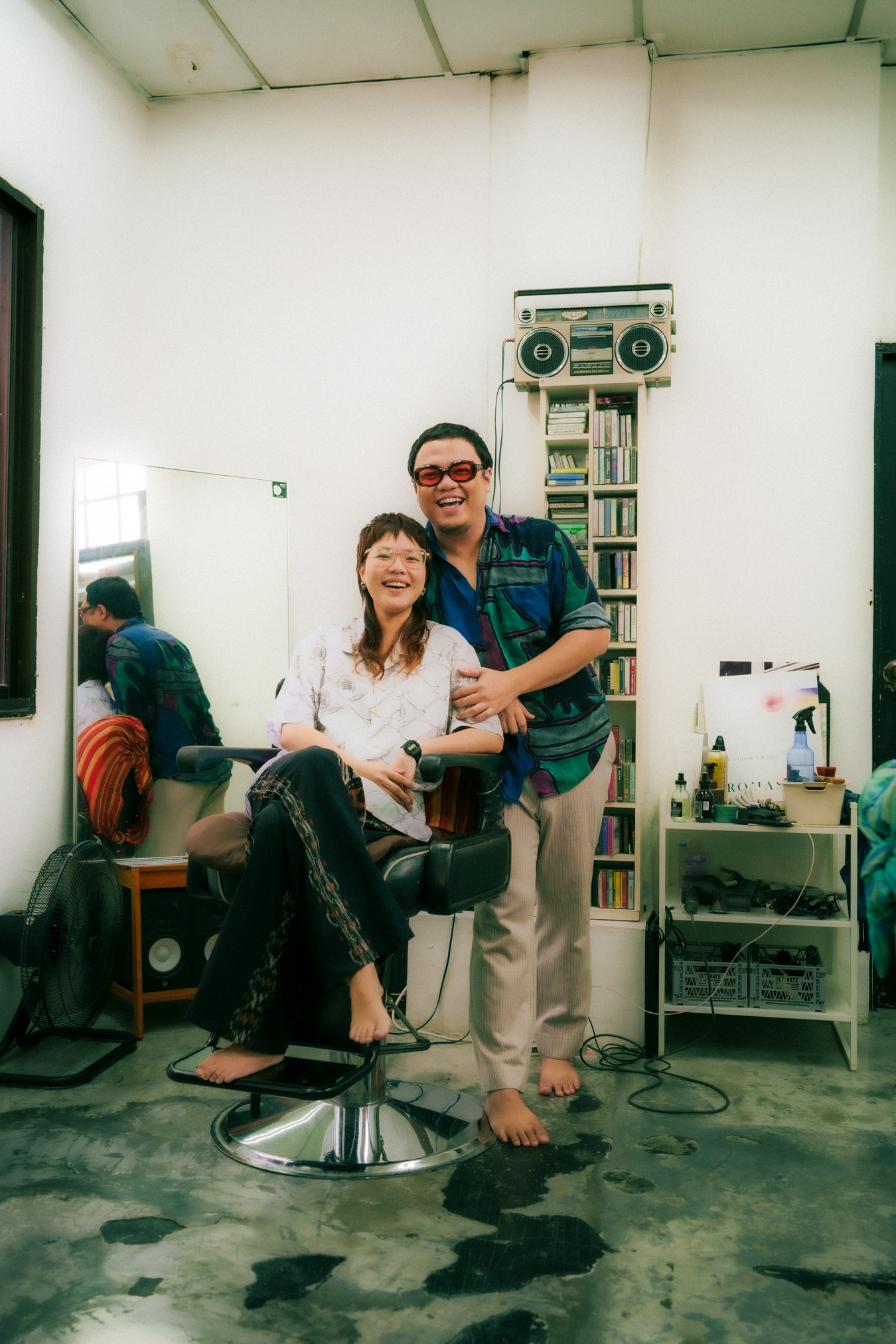
Of all of the unspoken risks one could take as a couple, starting and running a business together ranks quite highly on the list. After all, it’s one thing to decide who does the dishes, but a whole other beast to tackle when it comes to making important decisions that could potentially make or break your business, not to mention the unavoidable blurring of lines between work and life, professional and romantic. And so the saying goes, “don’t mix business with pleasure”, but when you and your soulmate are aligned in your goals and professional aspirations, surely the risk is worth it, right?
Of course, there are tons of stories from both ends of the spectrum, but what we’re more interested in are hearing from couples who have taken the plunge and emerged stronger and closer than ever. Because if there’s one thing we’ve come to realise after over a decade of telling your stories, it’s that there’s a rare magic in building a legacy with your best friend—someone who has seen you at your most vulnerable and knows exactly how to leverage your strengths. While industry and skillset are the bones of a business, the marrow is often the unspoken shorthand between two people who just get it.
So this Valentine’s Day, we’re stepping behind the curtain to spotlight couples who have proven that this risk is worth the taking. From the creative friction that sparks their best ideas to the quiet routines that keep them grounded, we explore the unseen dynamics of couples who don’t just share a life, but a vision.
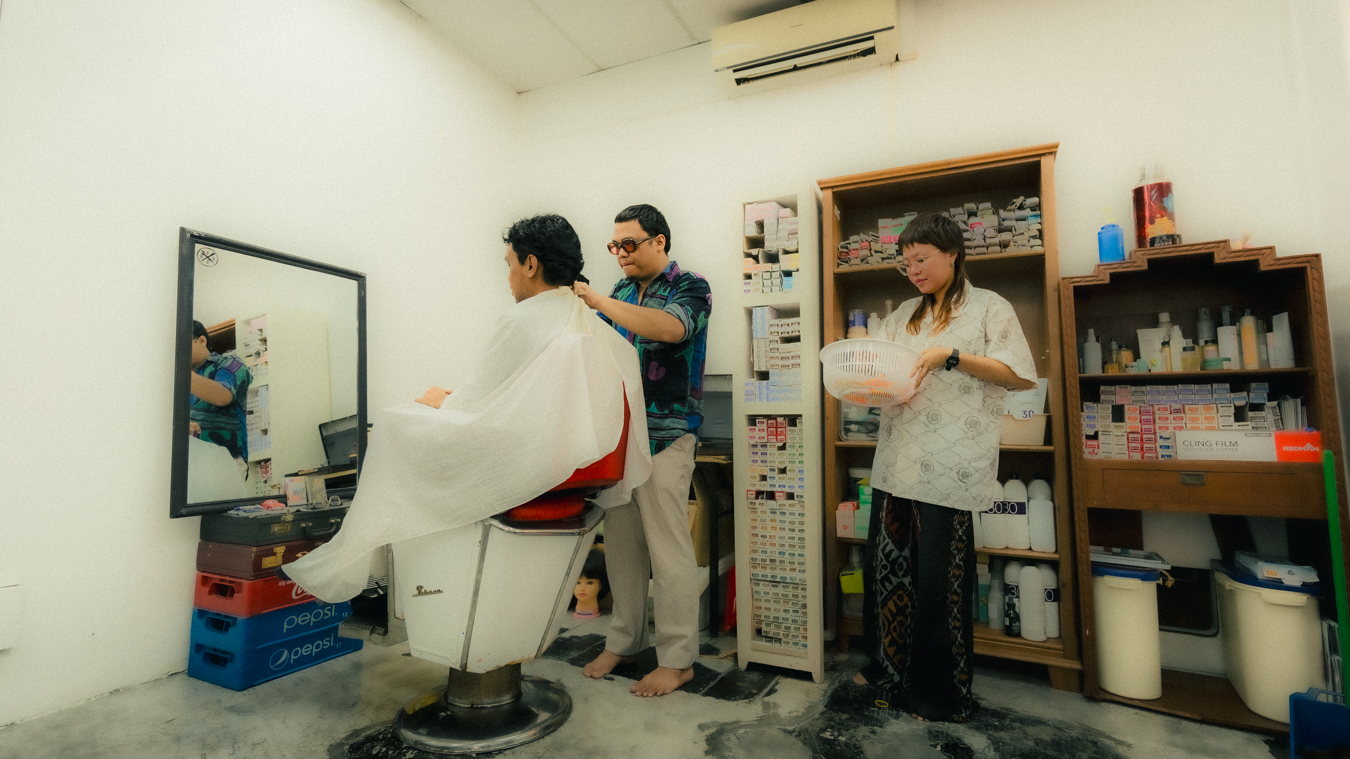
Our first couple are masters of the scissors, each formidable in their own right. Akid and Tingwei, the duo behind Kidting Barber and Salon, have spent the last five years building more than just a business tucked away in a Geylang shophouse; they’ve built a community. Their reputation precedes them, fuelled almost entirely by word-of-mouth—a testament to the craft and chemistry that has since garnered them a two-month waitlist.
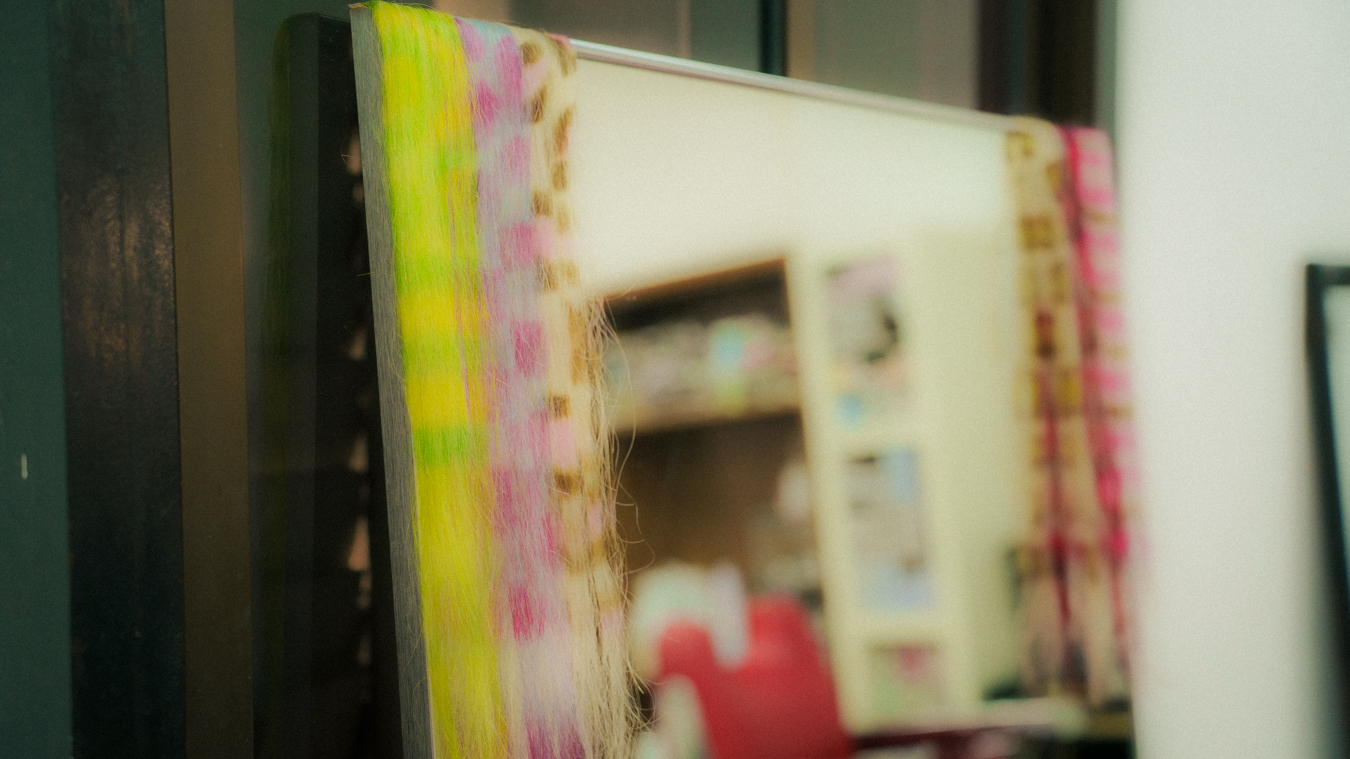
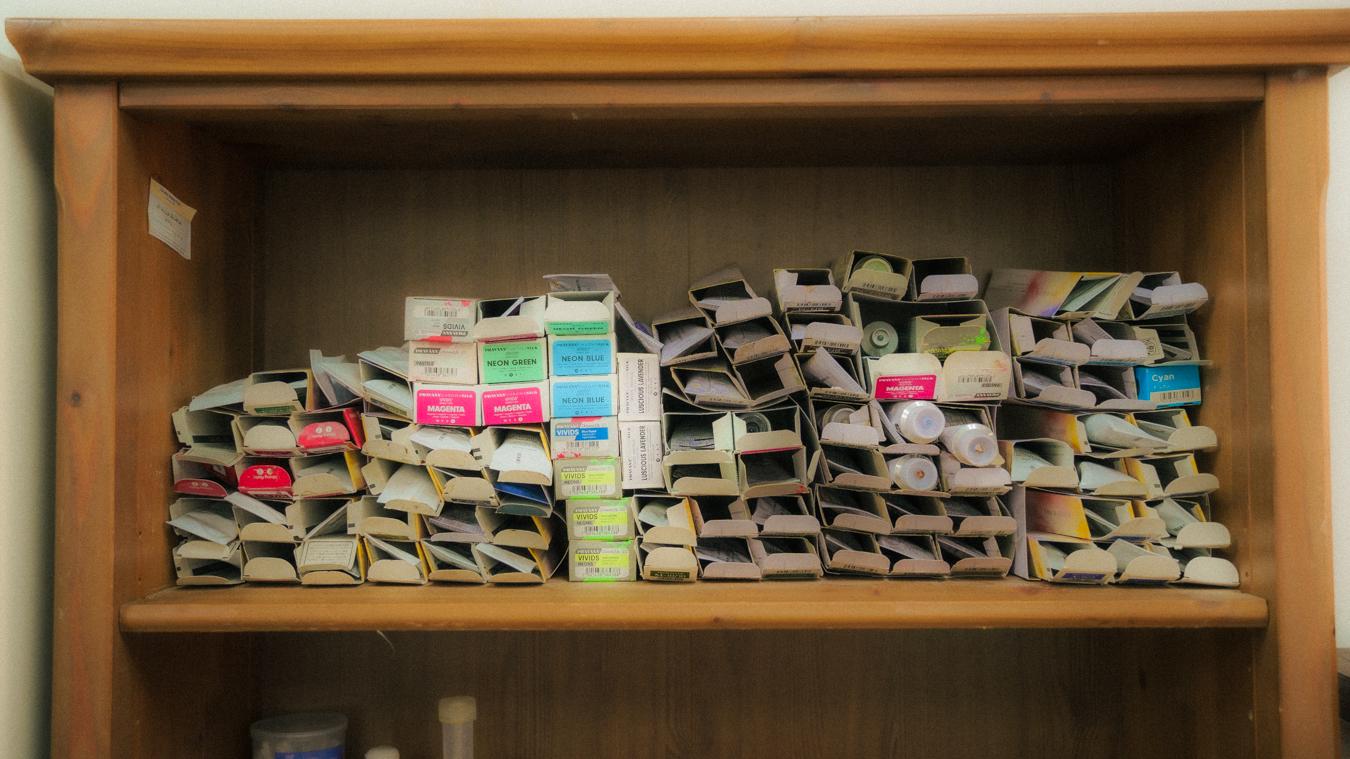
Most hair studios choose a side: barbering or salon styling. But Kidting, as its playful name suggests, is a combination of both. The studio is a blend of two very different worlds—Akid has spent 13 years in the trade, starting out in a local barbershop where his very first haircut took four hours, before eventually striking out on his own. Tingwei, on the other hand, started out at a Japanese salon, honing her craft for two and a half years before taking a leap of faith to join him.
That transition wasn’t easy for Tingwei. It meant leaving behind a steady salary and the safety net of a mentor for the unknown in more ways than one. While she felt the weight of the risk, Akid saw only potential. “I tried to psycho her,” he laughs as he describes how he spent a year encouraging her to join him, certain that this independence would broaden her horizons. Eventually, she said yes to taking the next step in growing her career as a hairstylist, explaining that “ultimately, when you start to be your own stylist, you cannot always be relying on your mentors or seniors. You have to figure it out on your own and stand on your own two feet.” And thus began their journey together as Kidting.
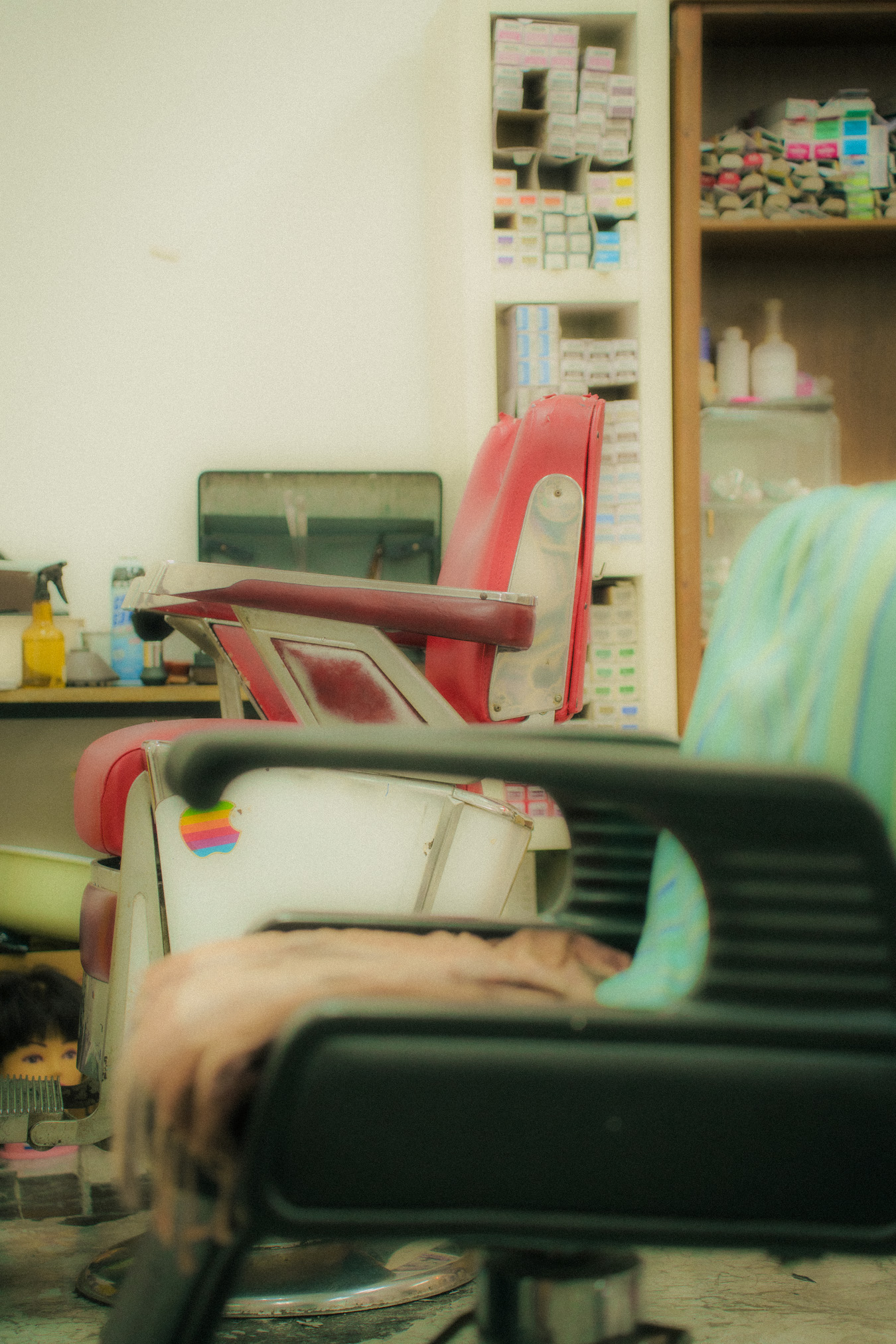
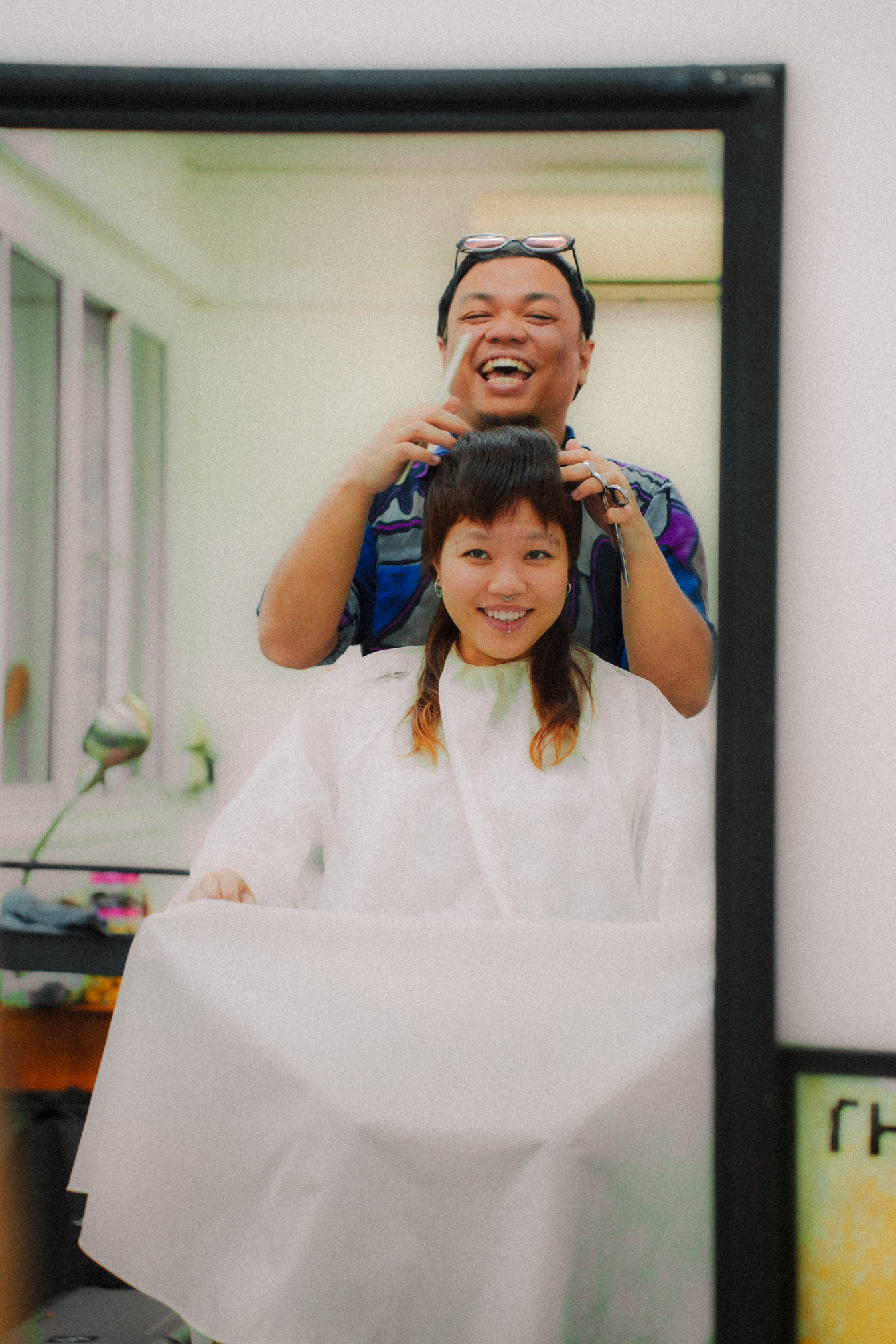
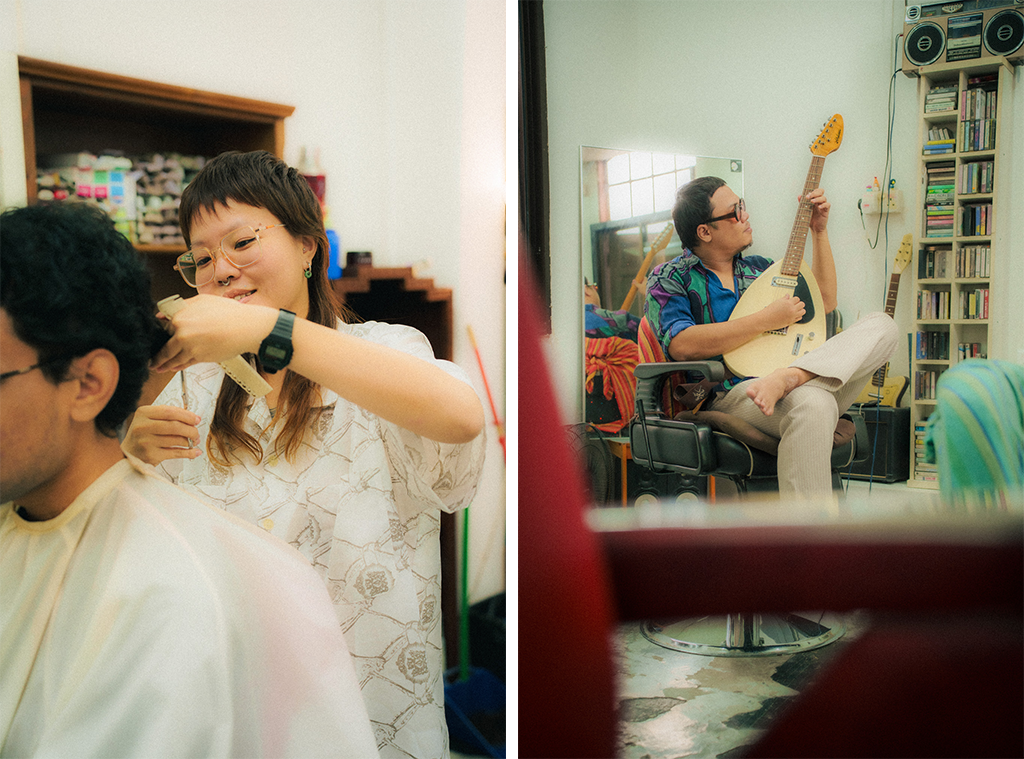
While they run the business as a unit, Akid and Tingwei usually operate in their own zones. Each has a station at opposite ends of the studio, with their respective tools splayed out and ready for work. However, this distance disappears when a specific detail requires a second pair of hands. For instance, when Tingwei needs to use a razor on clients, she often beckons Akid over; his years in the barbershop have made him a master of the tool, and under his guidance, she has steadily built the confidence to make it a part of her own kit.
This hands-on collaboration is a natural extension of the way they’ve spent the last few years trading skills. Akid’s strength lies in the technical foundation of a cut. In the barbering world, the goal is to achieve a shape that looks good the moment a client rolls out of bed—low-maintenance, durable, and precise, because as Akid tells us, “as guys, we don’t even blow dry our hair!” Tingwei, however, introduced him to the potential of styling, showing him how using the right products aren’t just a redundancy or hassle, but a tool to help a haircut look its best, because sometimes, “if we don’t use any products, the hairstyle just doesn’t look quite right.”
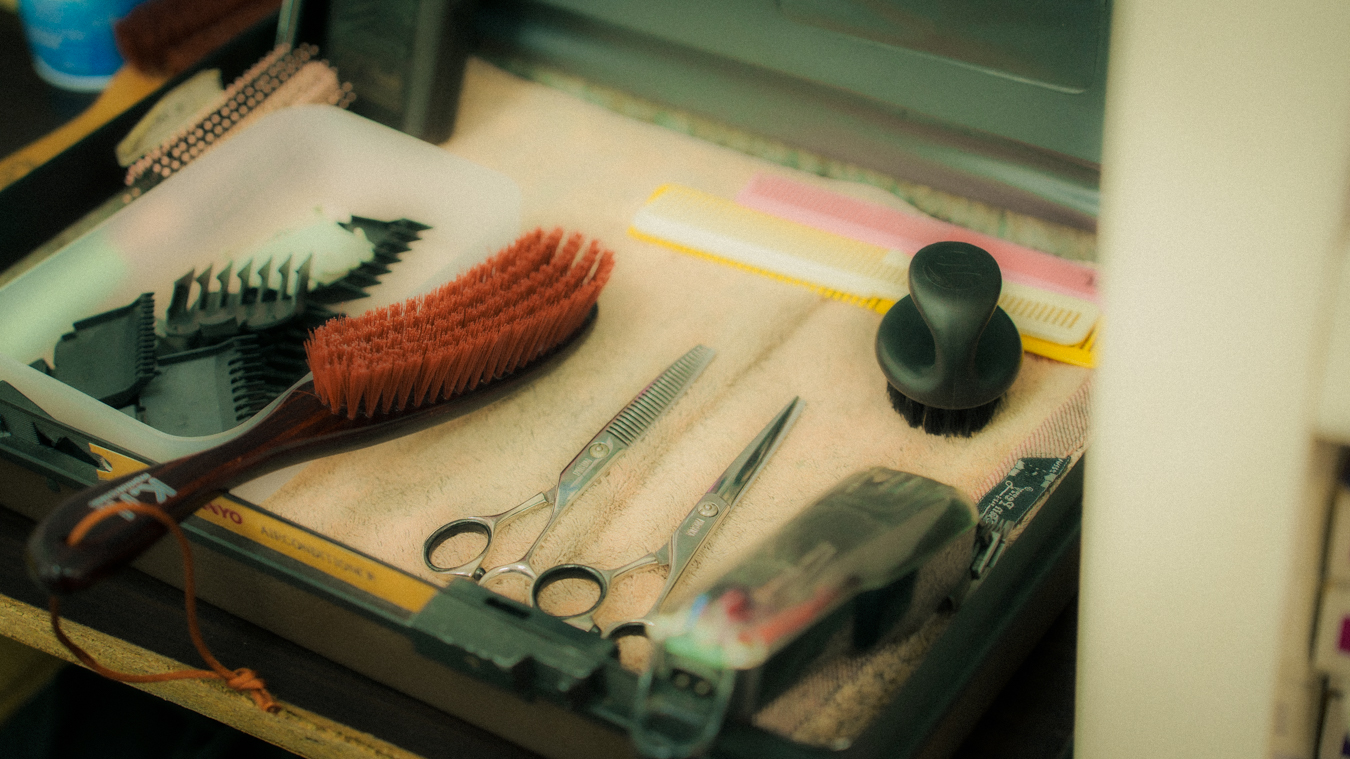
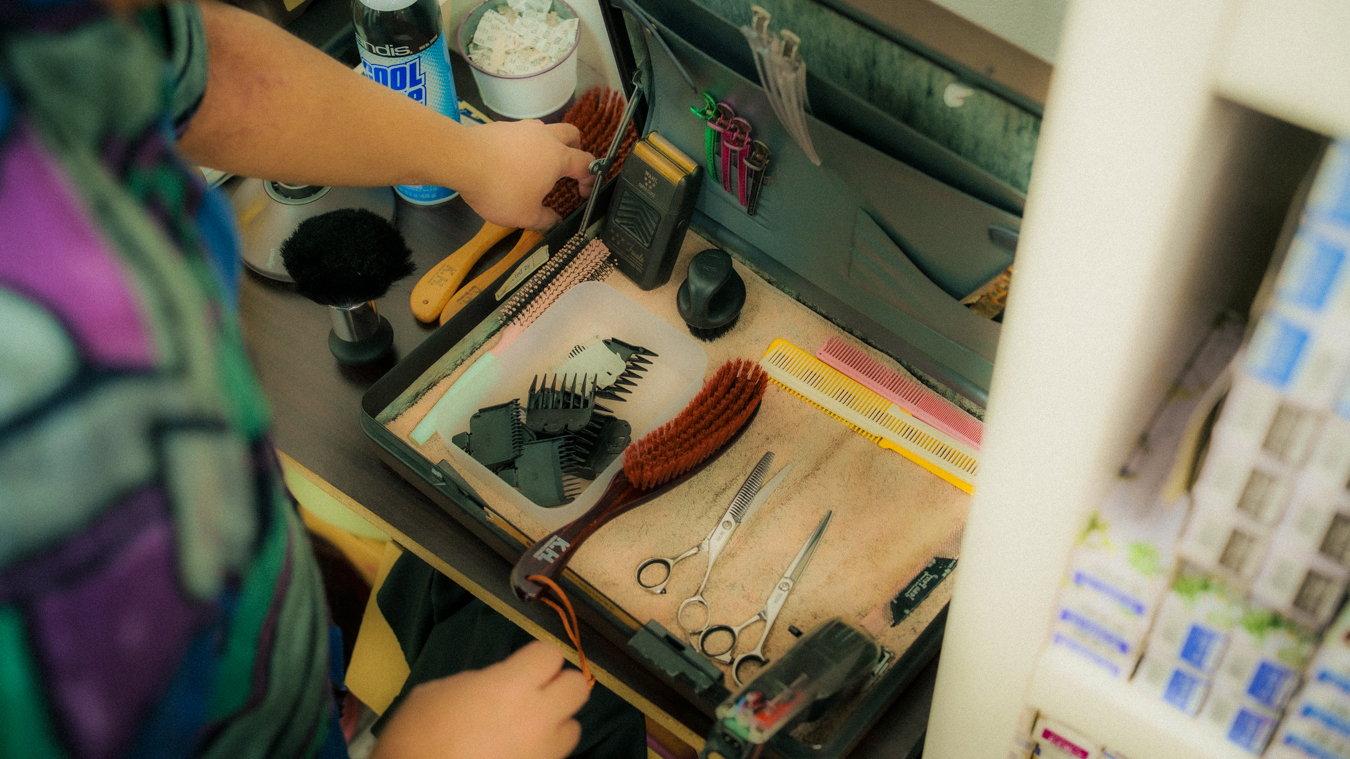
On the flip side, Tingwei has had to unlearn her reliance on these very products. Coming from a salon background where styling is often the main focus, she learned from Akid how to trust the architecture of the haircut itself—working with the natural fall of the hair instead of forcing it into something it isn’t. This is what Akid calls the power of the cut: building an intentional shape so that the hair doesn’t need to be propped up by pomades to look right.
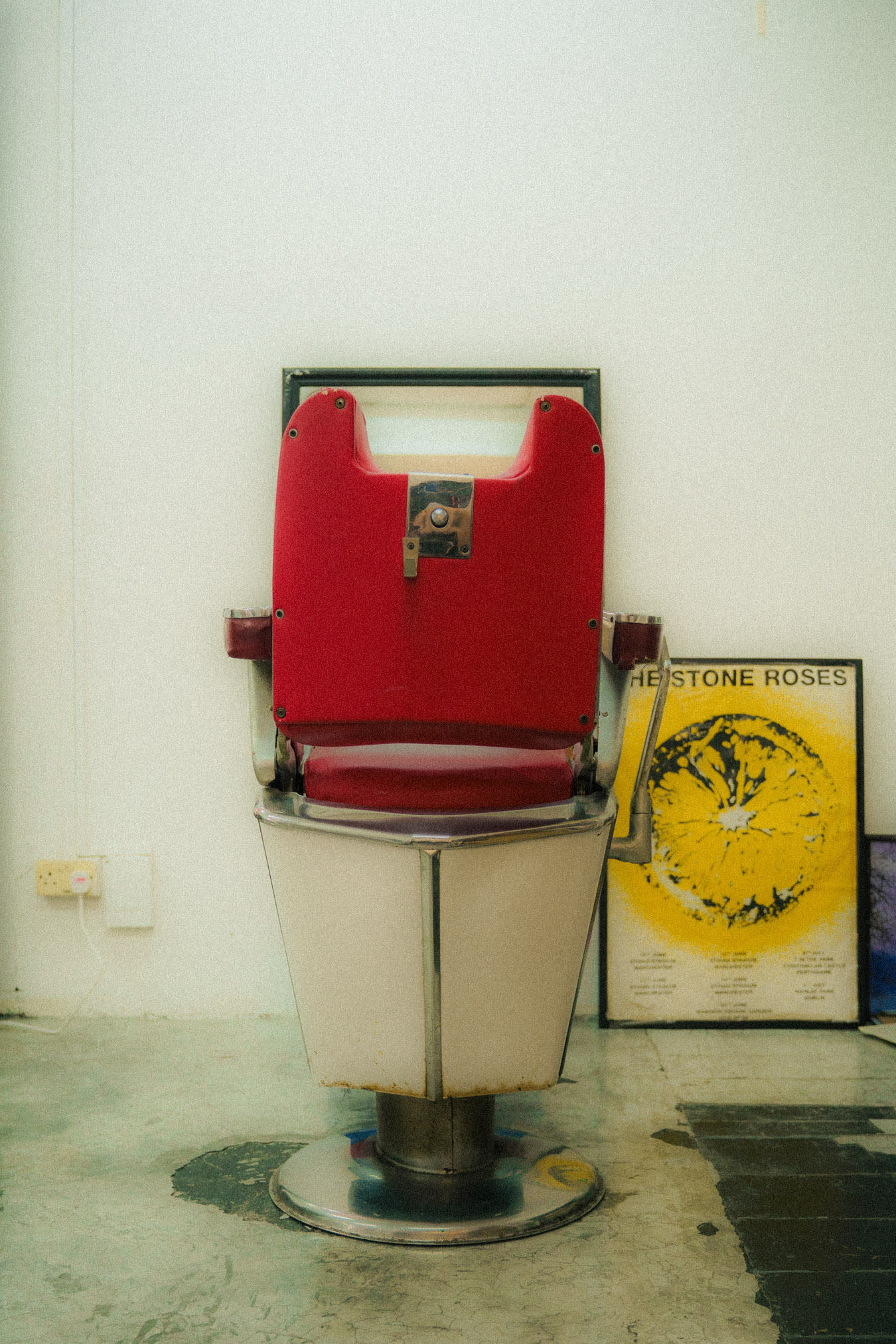
Their success, however, comes down to more than just technical skill; it’s about the intentionality they bring to their clients. The couple treats each client relationship much like their own partnership, building upon honesty and conversation. When a client shows them a reference photo, they don’t just say okay; they discuss what will or won’t work, preferring to be truthful rather than rushing someone through the cut. For them, a good haircut is the baseline, but the trust built in that seat is what keeps people coming back, to the point where clients don’t even have to look in the mirror to know that Akid and Ting have done a good job. “Sometimes my clients will sit down and they won’t even have to explain what they need,” Akid muses. “The most they’ll say is ‘the usual’ then we’ll start chatting, and when I’m done and want to show them the haircut from the back, they’ll say ‘no need to show lah!’”
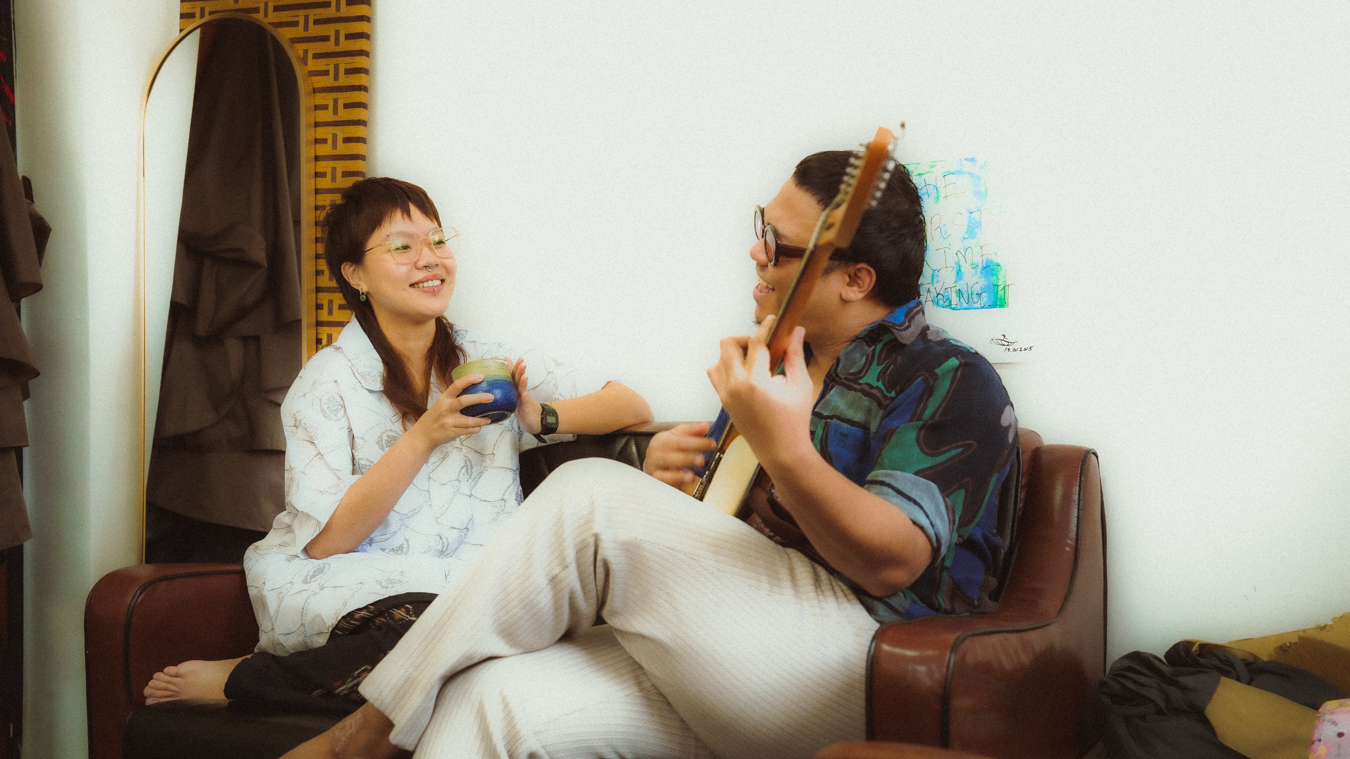
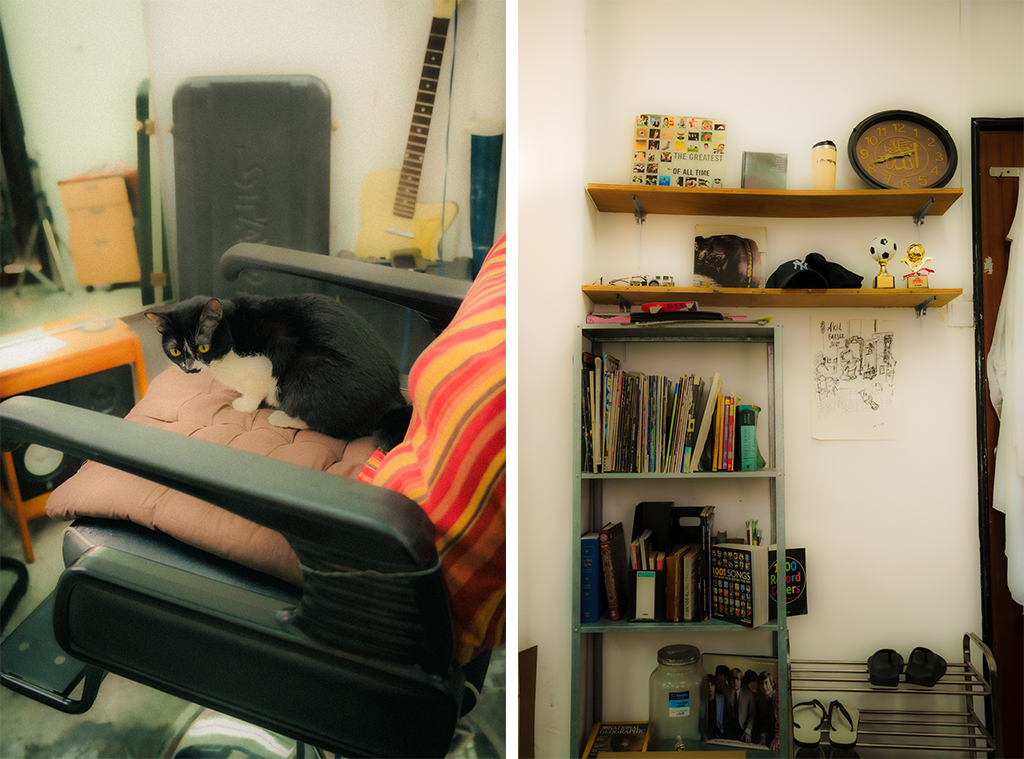
This sense of connection extends to the studio space itself. Guarded by two cats, Sora and Roku (who might settle in your lap if you’re lucky) the space feels less like a typical shop and more like a home. With a cozy lounge area at general store GTownHQ—the couple’s second and newest venture together with their friends and neighbours, and a story for another day—in the next room, Akid and Tingwei have created a sanctuary where connections are just as important as the service provided.
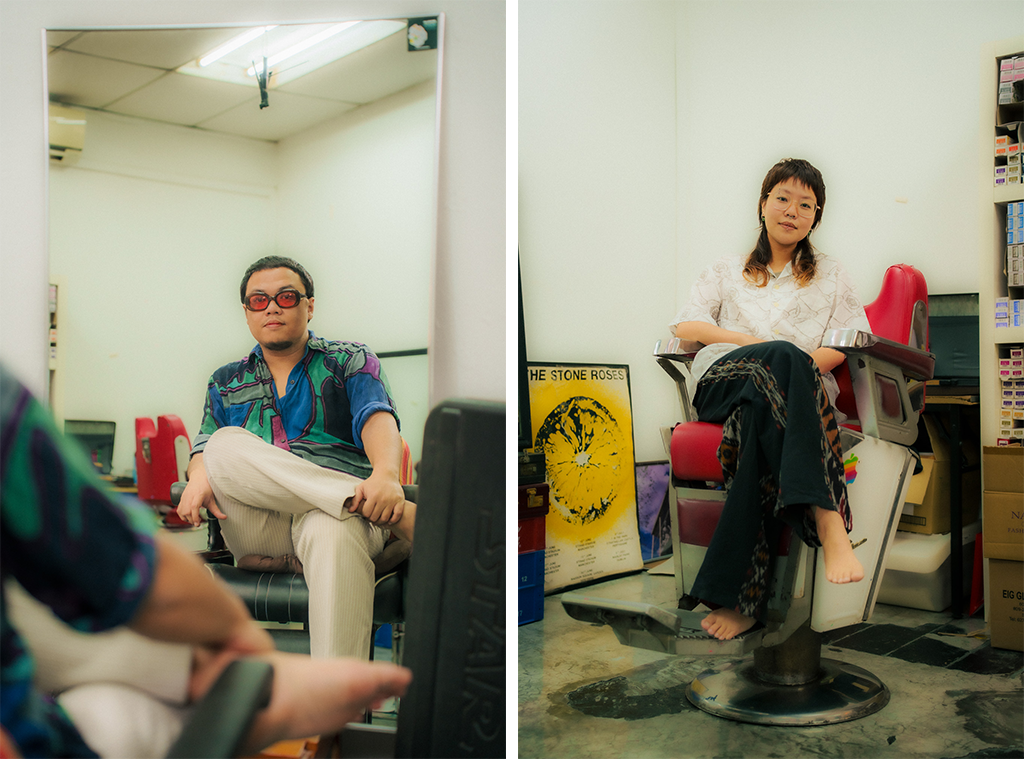
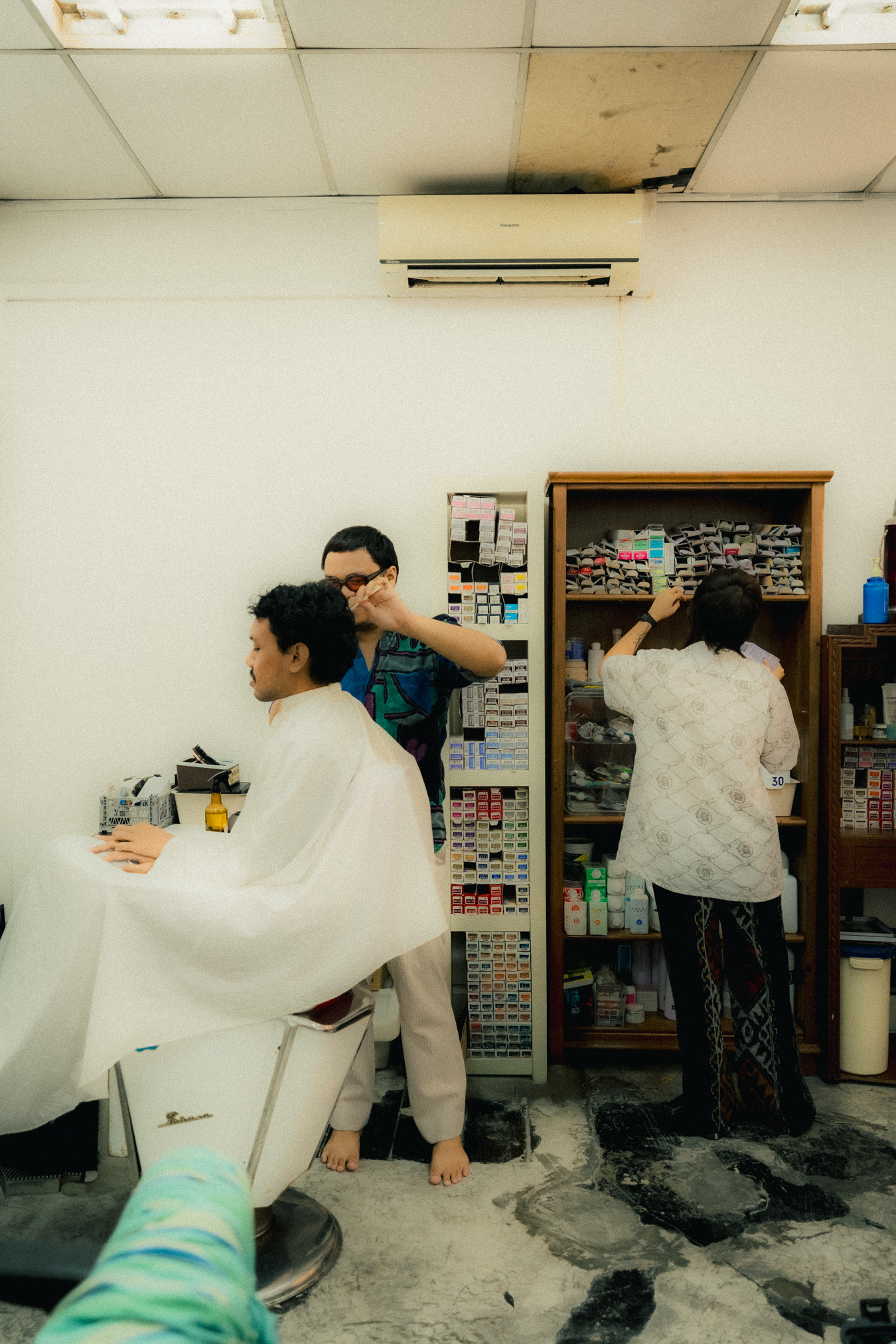
Because they live close to the studio, the couple is intentional about setting boundaries. While the space is homey for guests, for them, it’s simply a place of work. To keep that distinction clear, they try to be in the studio only when necessary. Mealtimes are their primary way of stepping away; instead of ordering in, they head out for lunch or dinner, using those walks to find a few moments of respite together. “I start my day earlier than Akid, so we don’t really have breakfast together,” Tingwei adds. “We spend more time together during dinner, but I’m not a night person at all—after just a while, I’ll want to head back to sleep!” That said, on their off days, the pair makes a conscious effort venture further to neighbourhoods like Yishun or Toa Payoh, visiting areas they rarely frequent to fully disconnect and recharge together.

Like any couple, disagreements happen, but Akid and Tingwei are careful to keep that energy away from the chairs. “If we have an argument, I’d rather it happen after work—and it has to be resolved before the next work day starts,” Tingwei explains. She’s adamant about not harbouring negativity while on the floor, as her work requires total focus. If a disagreement does surface, they make it a point to diffuse it quickly, ensuring the peaceful atmosphere remains unsullied.
Building a business together has also given them a new perspective of one another. Working side-by-side means seeing a version of their partner usually reserved for friends or colleagues. “I get to hear all these stories just by listening to him talk to his clients,” Tingwei says. While she learns about Akid’s past, he has had a front-row seat to her growth. He recalls how, in the early days, she might cry over a small mistake. Now, her resilience has strengthened. “She’s more realistic with her expectations,” Akid notes. “I’ve seen her grow to understand that some things are beyond our control—you just have to ride whatever is given to you.”
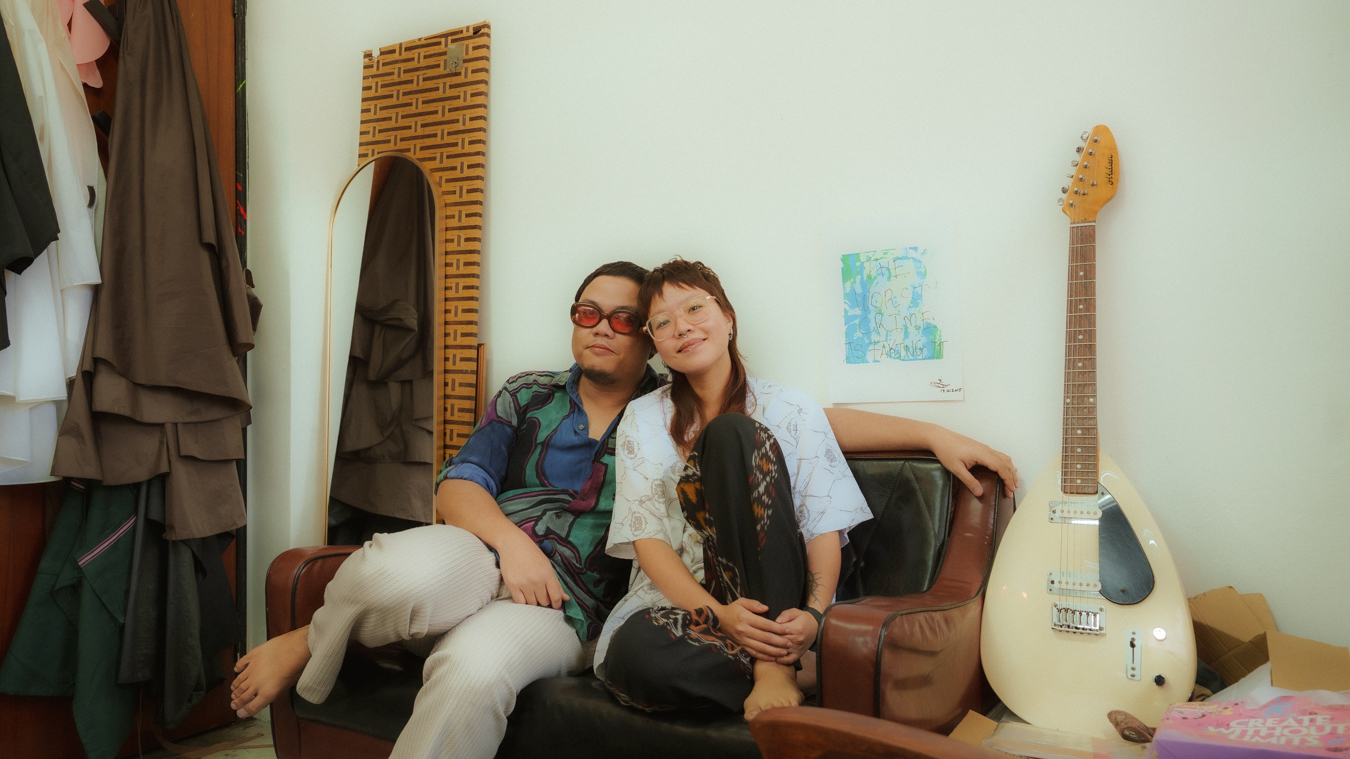
Regarding the future of Kidting, the goal is simple: sustenance. Rather than yearning for anything grandiose, the couple values the lifestyle they’ve built—the quiet luxury of having a workspace just steps from home. As long as they’re healthy, happy, and providing good service, they feel there’s reason enough to celebrate. There’s no desperate sprint toward a distant goal; instead, the plan is to take life day-by-day and let the currents carry the business where it needs to go.
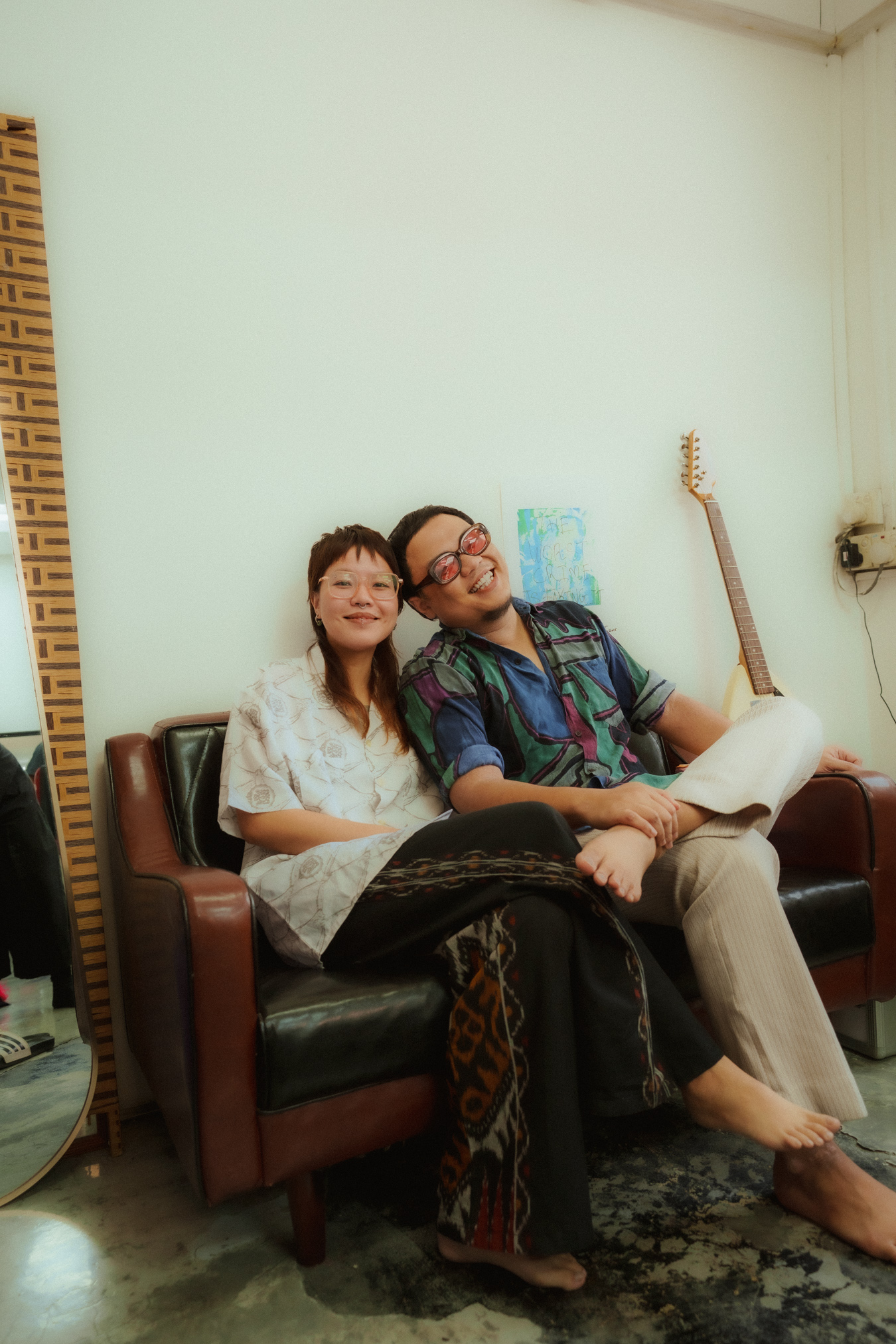
When asked what love means to them, Tingwei’s answer is immediate: “Love is reciprocal.” Akid, however, sits with the question for a long minute. “I don’t know ah,” he says with a laugh, unable to pin it down to a single definition. Tingwei eventually steps in, offering a bridge for him: “Love is more than words.” Akid’s eyes widen slightly and he eagerly nods with approval—a quiet testament to a relationship where the things left unspoken are often the ones that carry the most weight.
Kidting Barber x Salon
749A Geylang Road
Singapore 389655
Instagram
GTownHQ
749A-5 Geylang Road
Singapore 389655
Instagram
Like this? Share it.
What others are saying
There are no comments yet.
Leave a Reply