Another Nightlife Story: Ice Cream Sundays
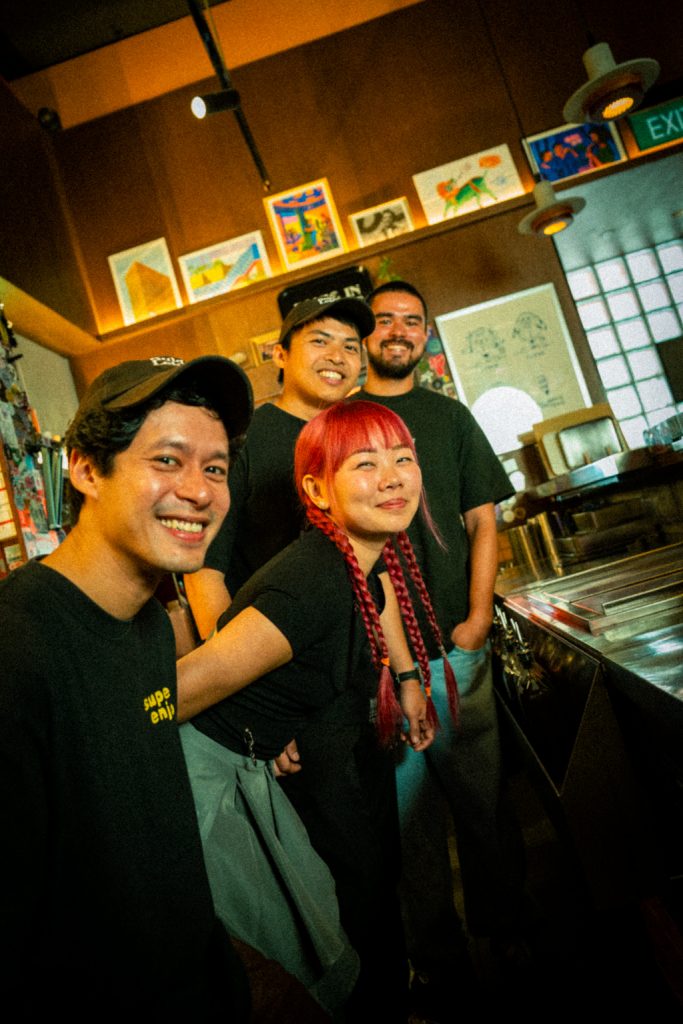
In the first two parts of our Another Nightlife Story series, we’ve seen how party organisers and collectives 5210PM and Wild Pearl are redefining the concept of nightlife locally, from the former’s intentionality in each daytime party hosted, to the latter’s focus on wellness and rejuvenation. This time, as we wrap up the series (for now), we explore the idea of immersion in these day-to-night parties.
Part of the reason why the traditional nightlife and clubbing scene feels so cathartic is because everything is shrouded in the mysterious blanket of darkness—venues are often dimly lit, and under the cover of late nights and early mornings, everything seems to blend into one cohesive, heart-thumping experience. But when a party starts in the day, while the sun is still up and everything is brought into focus and clarity, how then can a similar level of immersion be achieved?
As Ice Cream Sundays would tell you, it’s all about the set.
If you’ve ever been to an Ice Cream Sundays party or event, you’ll know that they’re big on creating a whole new world by hand. From elaborate props to fun, wacky themes, it’s not an Ice Cream Sundays party without the whole gang being activated to curate and cook up an otherworldly environment that allows visitors to step completely into a new dimension—an environment where you can forget the everyday for a bit and fully enjoy the music, ambience, and company of like-minded folks.
Of course, it did take the team some time to grow and evolve into what they are today. When the group first came together a decade ago, their concept was more of a roving house party, with small-scale events held on the rooftops of friends’ homes and apartment buildings. Over time, as their following grew, they started shifting to venues that could accommodate larger crowds, which was also when they started taking more than just the music into account. Elements like lighting and set design soon came into play, and now, 10 years on, Ice Cream Sundays has created a niche and name for themselves in the local nightlife scene.
As Ice Cream Sundays commemorates their tenth anniversary this year, we sat down with the core team to talk about how Ice Cream Sundays has grown over the last decade, not just in size and scale, but in their creativity as well.
Running this for 10 years is no easy feat! How would you describe how Ice Cream Sundays has grown?
Jake (J): It’s definitely grown a lot over the past 10 years. As we outgrew our origins, we started moving into larger venues and that’s kind of how everything blossomed into what it is today—a day-to-night pop-up party.
Since then, we’ve incorporated a lot more elements into our parties. Yes, music will always be an important central pillar of everything that we do, but now we’re also looking at things on the production side as well, like lighting, set design, stage design, and experiential design as a whole. Basically, we’re now looking into ways that people can interact with our events without necessarily having to be 100% locked into the music. And I think this is what makes us unique. We’re in a kind of sweet spot in terms of scale where we’re a little bit smaller than what you would call a festival, but bigger than what you might experience at a club or a smaller pop-up party. The fact that our events are now typically held in places that are not traditionally nightlife spaces also helps make the whole Ice Cream Sundays experience something out of the normal.
Dan (D): To add on to that, we don’t necessarily see ourselves as an alternative to traditional nightlife, but rather as a part of a wider ecosystem. Venues really form the backbone of a good, healthy local music scene, and we see our pop-up parties as sprinkles of something fresh that people can come and experience within this scene.
What I’ve come to realise is that people really resonate with the day-to-night concept, especially for the people who enjoy dance music but don’t want to commit to a 4AM night, or who want to have their kids experience this with them. And for us, we only do three to four Ice Cream Sundays parties a year, so it remains special enough and yet doesn’t take away from what traditional nightlife spaces are still doing in the scene. In fact, we try as much as possible to work with these spaces by throwing our afterparties in existing clubs, for instance. We always see ourselves working in tandem with these spaces because we appreciate them a lot for what they’ve done and are still doing for the local music scene. Plus, it helps us too, as people come to parties like ours because they’ve experienced the magic of being in a great club.
Another way in which we’ve grown is that every two or three years, we’ve added someone new to the team, someone who brings a fresh perspective and new skillset. This is the secret to how we’ve been able to continually evolve and stay relevant for 10 years, because everyone on the team has joined us at different steps along our journey and brought in something that we didn’t have before, whether they’re a part of the core team or someone in the extended crew.
Apart from the venues that Ice Cream Sundays’ parties are held at, another unique thing about your events is the space design. Can you tell us a bit more about this and how you choose your spaces and sets in general?
D: I think generally, we gravitate towards spaces that have some kind of local significance in terms of arts and heritage. A question we always ask ourselves is “Does this space have the raw ingredients that will allow us to build a unique new world where we can transport people at our parties?”
Bong (B): Basically we’re always looking out for spaces where people can just come and enjoy it however they’d like to — whether it’s a hedonistic time, or a really wholesome time. Our goal is just to build a space where they can do that.
On the production side of things, we’ve always wanted to create a full-scale festival, not just for our guests, but for ourselves as well, as people coming together to do a multi-day setup. So when we work on our set design, we really aim for it to feel like we’re all working on something big together. This is why we’ve always had a DIY aspect to our parties — it’s a very important part of what we do and our culture lah.
J: Although I must say, when we first started out, it was actually more of a necessity than anything else (laughs). When we started throwing larger and larger parties, we were still a small team that had never really done anything big before, so we didn’t have the connections that would help us to produce something on the level that we’re doing now, which is why it was all very DIY from the beginning. But then we realised that we sort of enjoyed this aspect of our parties as well, and our guests also really connected with this vibe, so we just built upon it over the years.
DIYing our sets wasn’t something we started out doing intentionally, but it’s since grown into something that we believe in philosophically, and it’s become a part of our identity as a group.
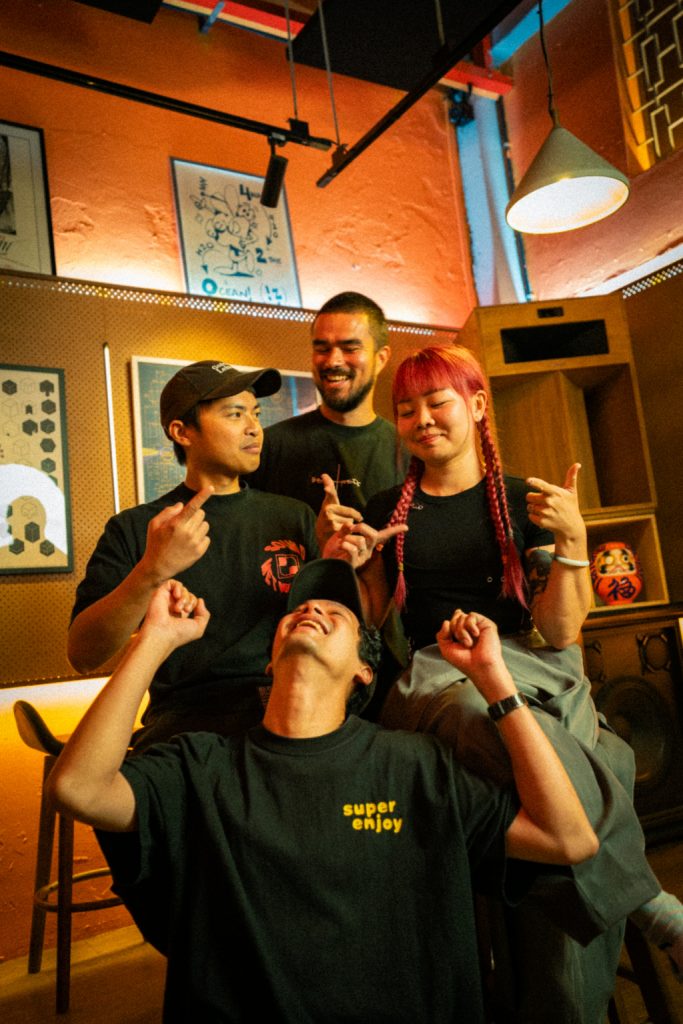
Why do you feel that these physical and visual elements of your set design matter so much to the whole experience of everyone coming together at your parties?
Clare (C): For me, it creates a sense of familiarity and warmth. There’s definitely a certain aesthetic sense, like a certain colour, theme, or textures that we usually go for with all of our sets, and I think that in turn creates this feeling of coming back to something that you’re familiar with, which would make our guests feel a lot more relaxed in the space.
Apart from that, designing a space that’s easy to navigate is important as well. In terms of all the pizzazz around our sets, that’s just us having fun (laughs). We like to explore and try new things all the time, which is why we keep pushing the boundaries of how elaborate our sets and themes can be. But then again, in keeping with the DIY aesthetic, we always try as much as possible to hand-make everything.
For example, our teammate Jen is always painting things from scratch and adding so much detail into everything she creates. There’s a huge difference between something that’s hand-painted versus something that’s printed, and though the former takes a lot more time, that’s what adds a special touch to the whole set. Other people might not put that much effort into hand-making something when it can easily be printed, but we always try to keep to that spirit of hand-making from scratch just to have a bit more intentionality with how we use things, how we see different textures, and how we create items that can be reused over and over again at our subsequent events.
D: Creating our sets together by hand is doubly important for us because we have this platform where over 1,000 people attend every event, so the cool part of this experience, apart from the music and dancing, is that we get to showcase the amazing work of so many creatives.
Whether they’re working on a more operational job or in a more creative role, this is something we really want to highlight, especially so since Covid when we evolved the creative team and got people like Clare on board. Now we all work in tandem to showcase the best of each other’s work.
B: Yeah, 100%. This is kind of a good chance for all of us to be a bit extra and like Clare said, just have fun lah. There are only a few other people and collectives in Singapore who do a really good job with their set design, so we want to continue to set the bar high when it comes to this.
D: We’re also deliberately whimsical with it because it reflects our brand. We try not to be too serious about what we do, and aim to bring joy to people at our parties. It’s all about being silly and having a bit of fun.
B: Yeah, high quality silly lah (laughs).
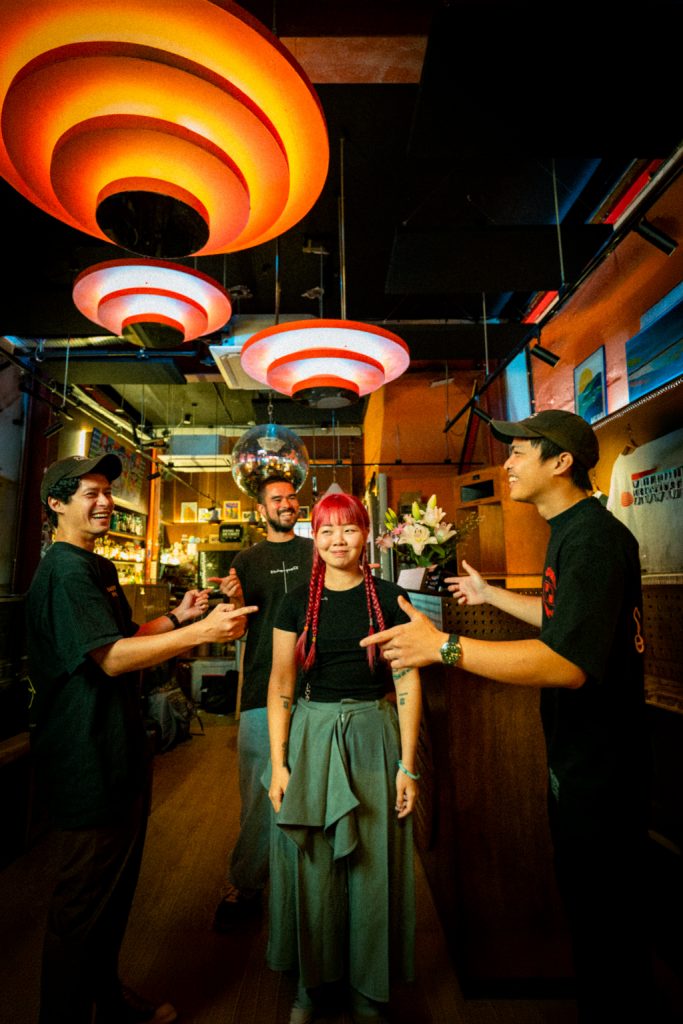
When you’re hosting day-to-night parties, how does the atmosphere and people’s behaviours shift as the event transitions from day to night?
J: I think the flow of our parties has been the same since the beginning, when we were hosting our glorified barbecues with music on a janky setup (laughs). A lot of people don’t really start off dancing — they stand around, relax, mingle, make new friends, and have a drink with whoever they came with. Even though our concept has changed a lot since then, the flow of the party has pretty much remained the same. The day starts out more chill with people sitting at picnic tables eating burgers and chatting, listening to the music from afar, and maybe even playing a game of chess. Then as the sun sets and night falls, the production really comes alive and the dance floor builds, and we’ll have people whistling and trying to get the DJs’ attention with their phones or something.
There are basically a lot of different ways to experience it. Like Bong says, it’s almost like a choose your own adventure type of thing, and by that definition, our parties appeal to many different types of people, which has always been a part of the Ice Cream Sundays DNA. We all came from different circles initially, and we always ask ourselves “How do we bring in more types of people to our parties?” We’ve done this by adding on to the experience, and by collaborating with different collectives like Darker Than Wax. All of this just adds to the character of our parties.
We never want to be exclusionary. If our music is your thing, and if you want to have a good time and be home by 11PM, you can come to our parties and not feel like you’re out of place.
D: To add on, we’ve gotten older ourselves over the past 10 years, and we’ve also seen a much broader spread of ages of people at our parties. I mean, we see kids as young as three years old, and my mum who’s 70 also comes, so this has helped us figure out our groove in terms of transitioning the vibe from day to night over the years. We try not to rip up the rulebook every time to do something totally different because there are things that always work, and I think there are things that people will always want. So even as we evolve ourselves, we have to make sure that we’re improving each time and not just switching it up for the sake of doing so.
On the topic of evolution, as Ice Cream Sundays continues to grow, how does the team relate to each other while balancing so many different creative minds and ideas?
C: It’s a very collaborative process for sure, but there’s also a certain structure to it that we try to stick to. On the creative side of things, how we work is that a smaller group of us usually comes up with a couple of ideas first, then we bounce them back and forth, land on one idea, and then we just build upon that. This is when all the other team members come in with their own expertise and focuses on expanding on their area, whether it’s the visuals or lighting.
But one thing we’ll always remember is the pain of setting up and tearing down (laughs). It’s always the most memorable part of the whole creative experience because it’s very painful, but also very fun. I mean, just imagine me carrying projectors that are more than half my weight!
J: Yeah I second what Clare said—because we’re all so involved in the production of the event, there’s a very interesting emotional journey that we go through together as a team that kind of bonds us as well. There’s a really gruelling setup process, then we have the party where everyone’s so happy, and then right after the last song, the lights turn on and we go straight into cutting stuff down and loading lorries immediately (laughs). It’s very interesting, the sort of peaks and troughs we go through as a team.
B: It’s like trauma bonding but self-inflicted (laughs).
Finally, as nightlife continues to shift, what are your hopes for where the culture in Singapore might go?
B: I hope to see more lasting institutions and venues, or even movements. Singapore is such a transient city, and things come and go all the time. If things keep rebirthing all the time, we lose a lot of our essence, and yet there’s so much value in passing the baton and seeing different generations come together to enjoy stuff in the same space. That doesn’t happen very often, so I would like to see more of that lah.
Like this? Share it.
What others are saying
There are no comments yet.
Leave a Reply